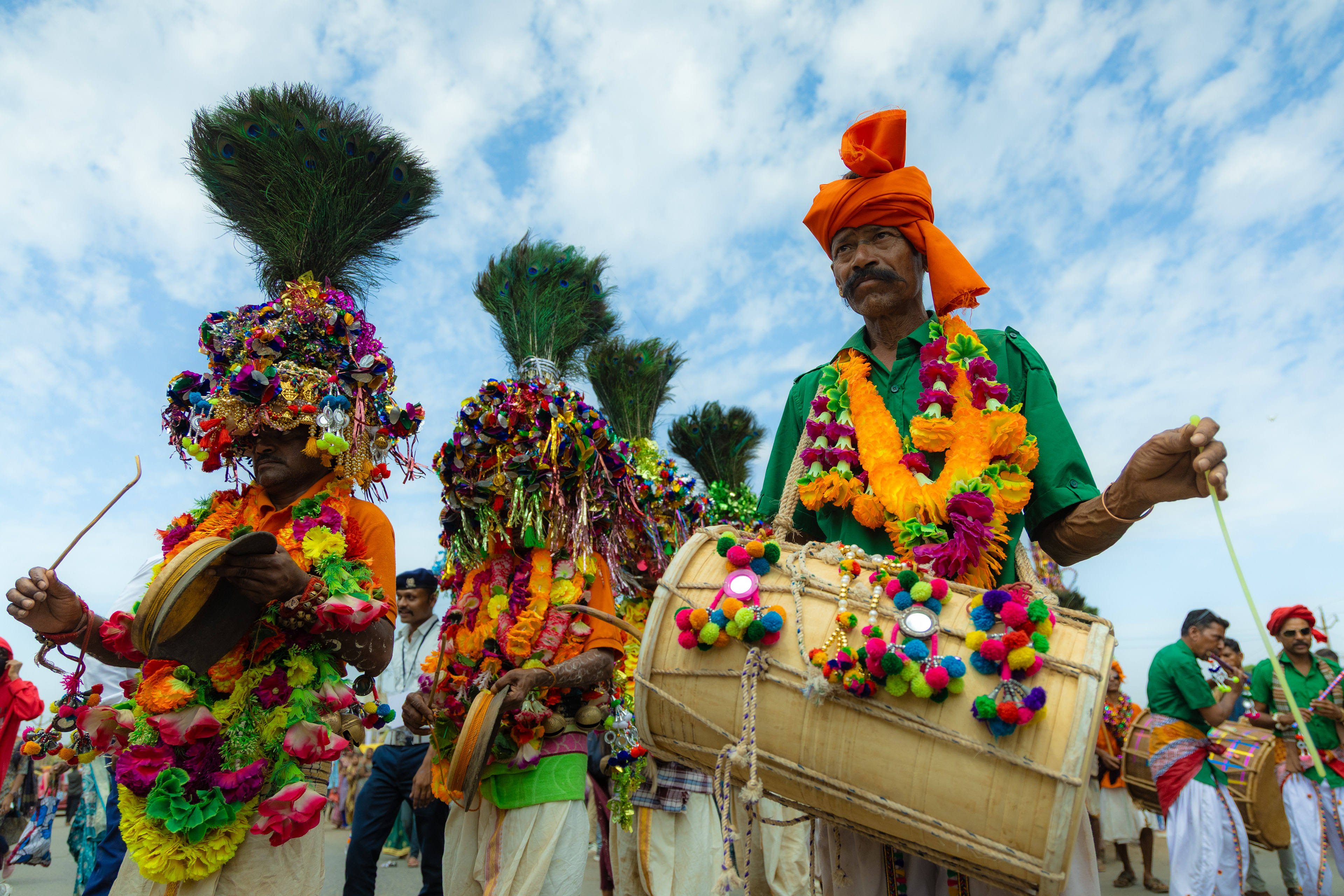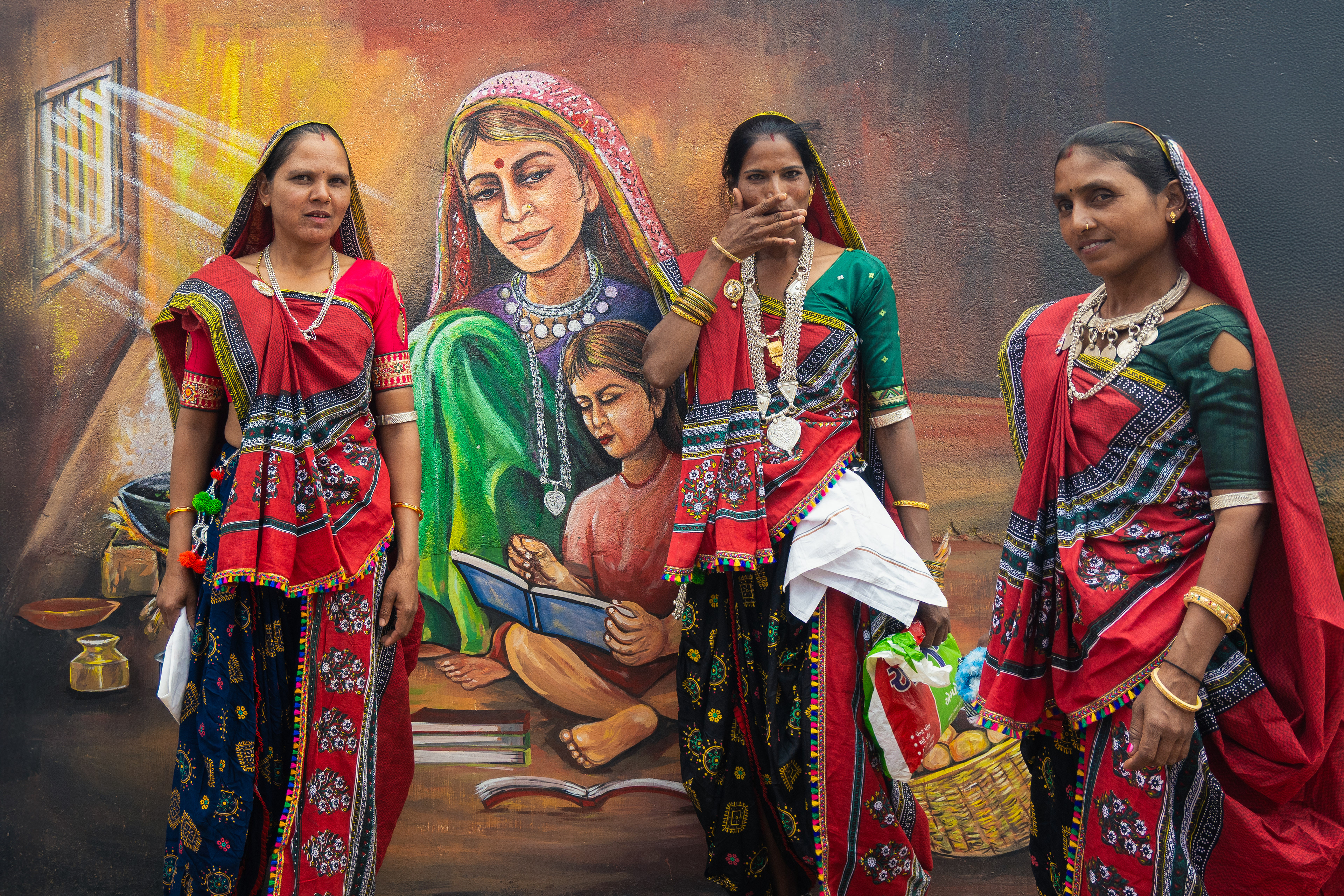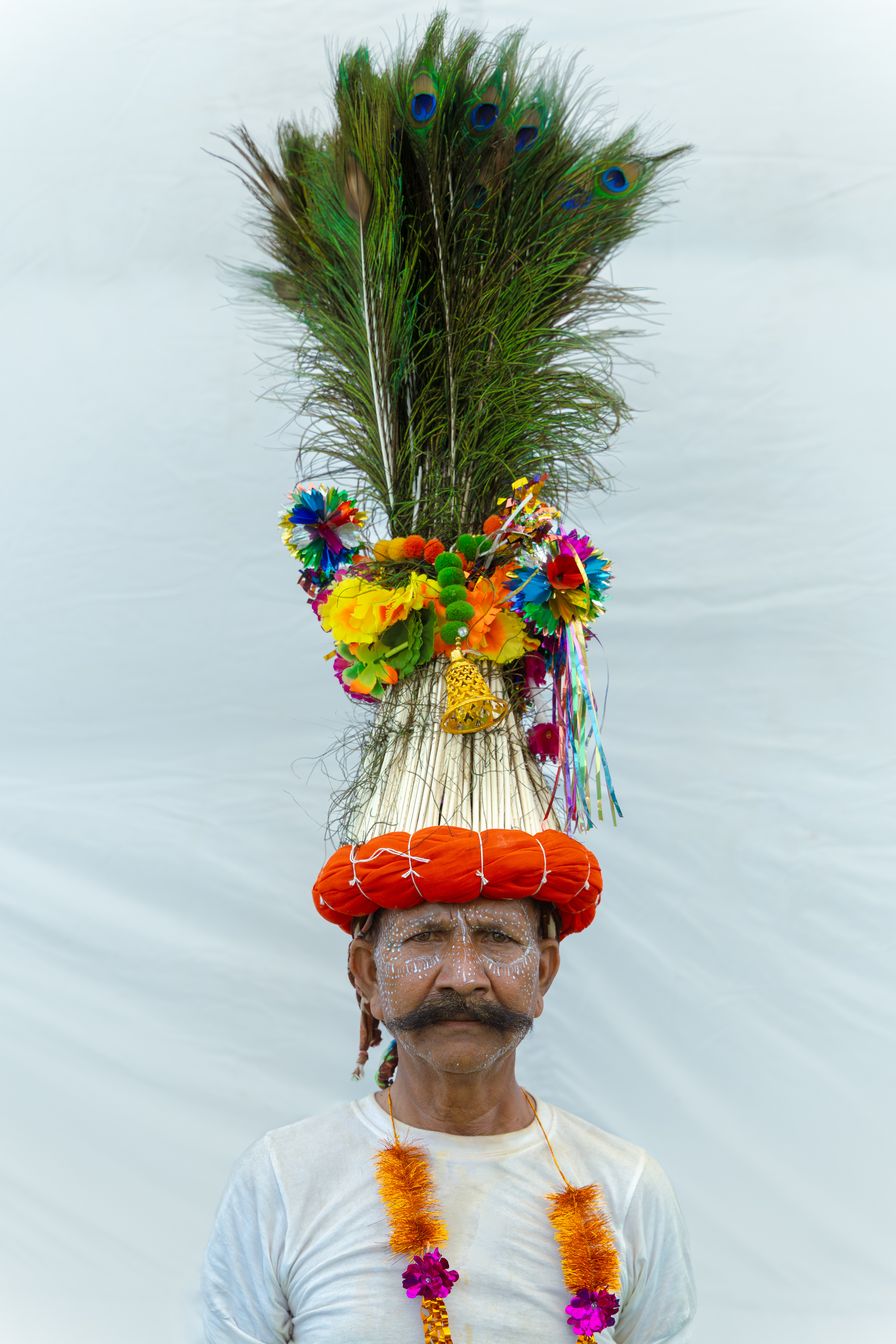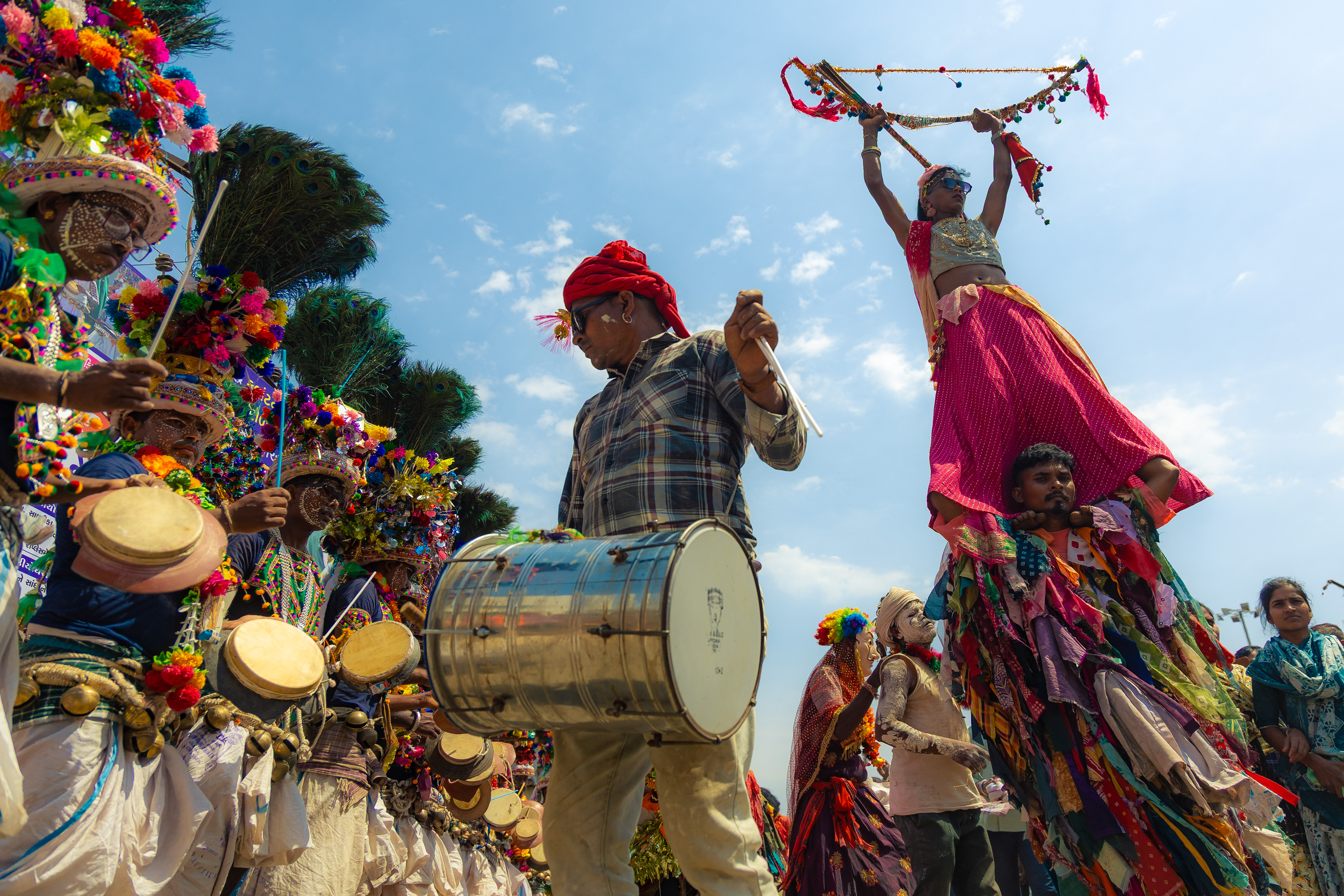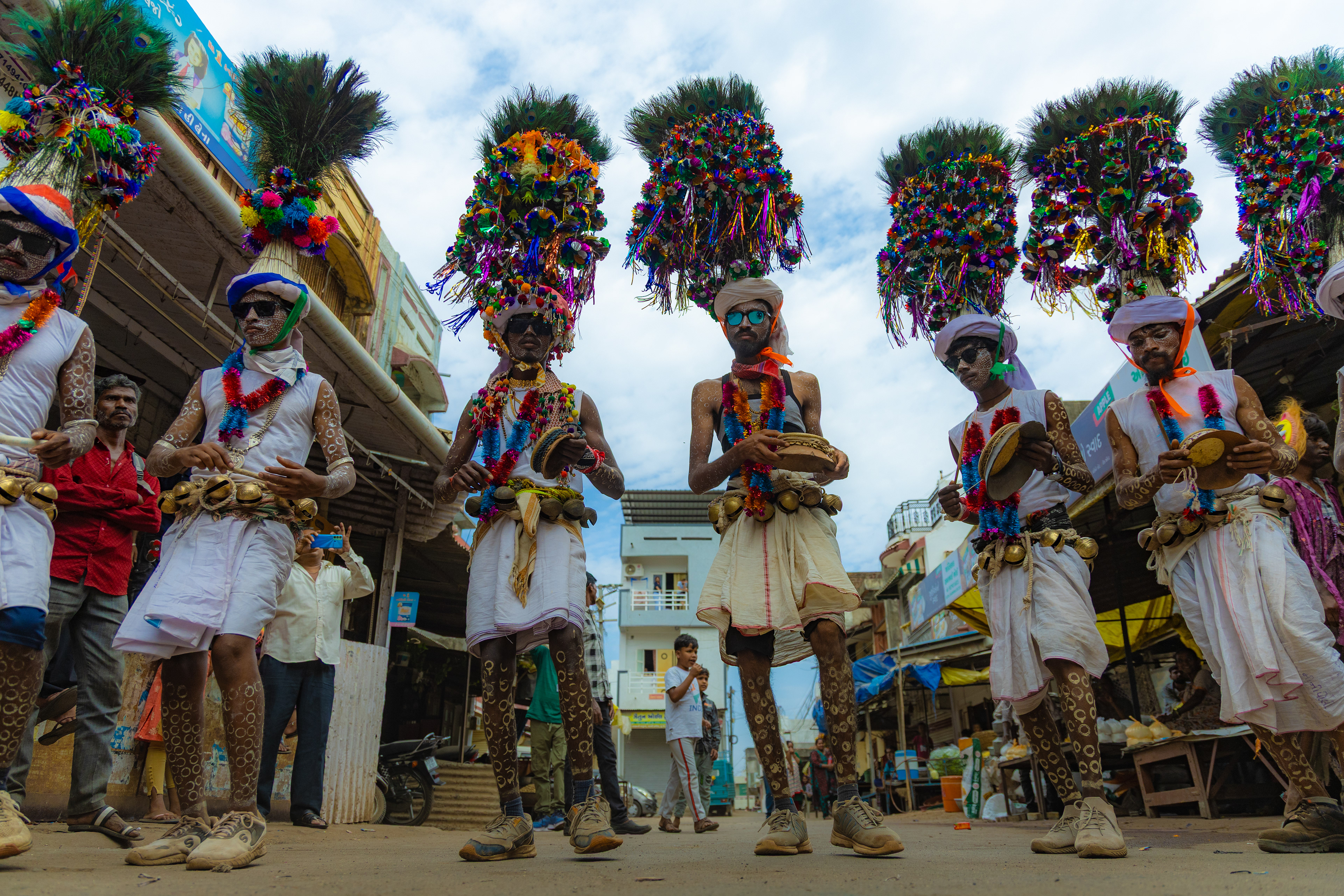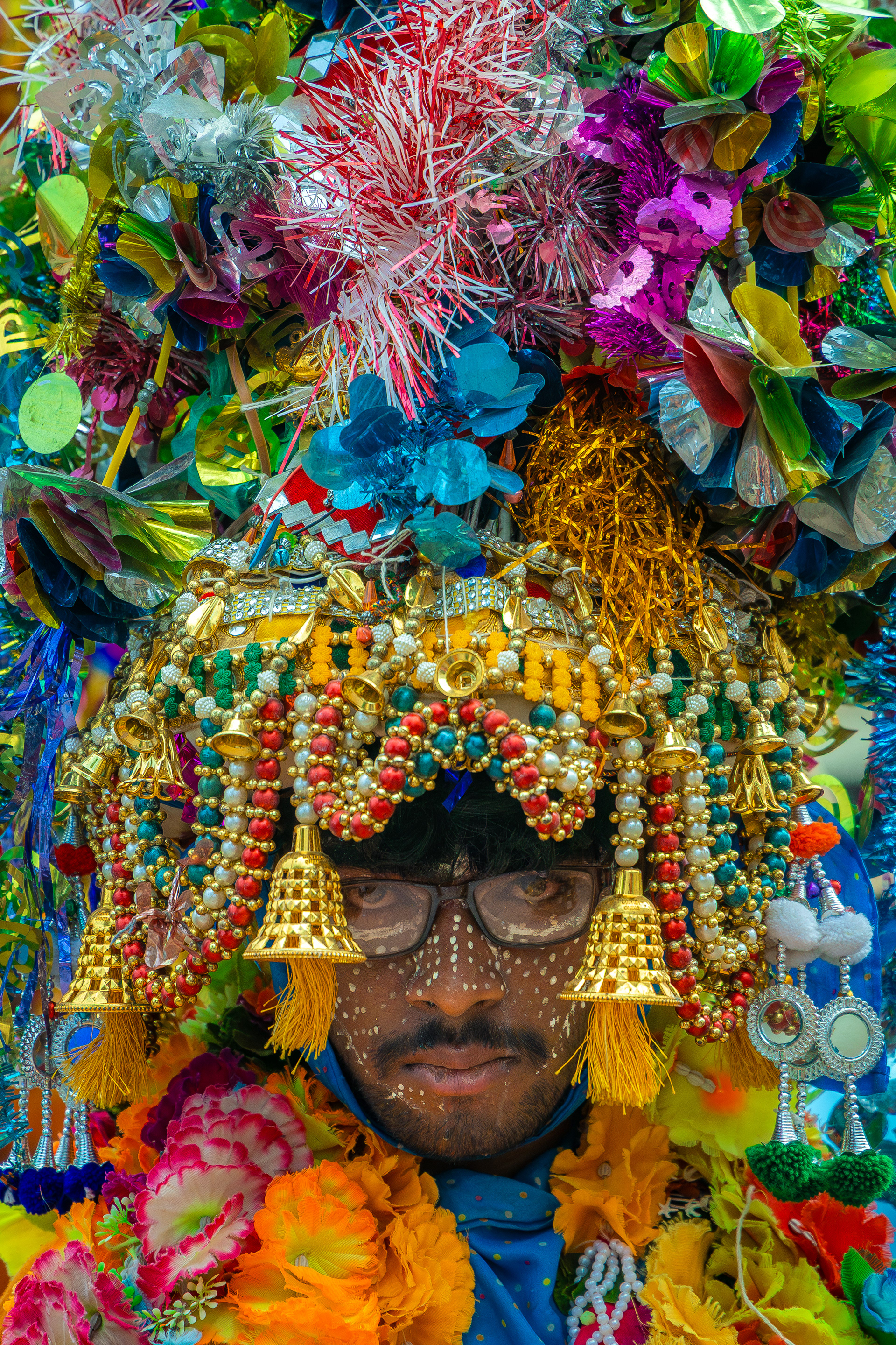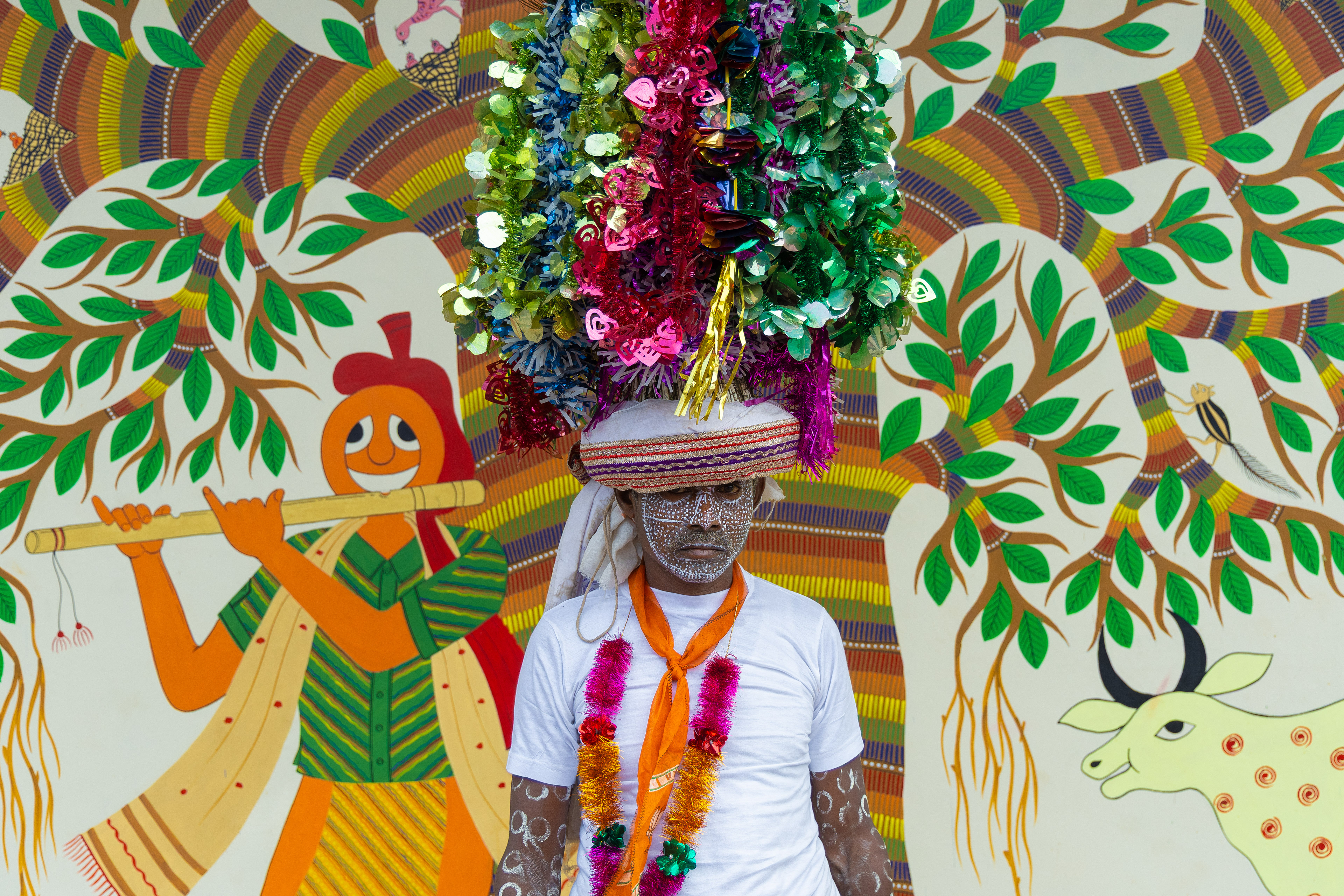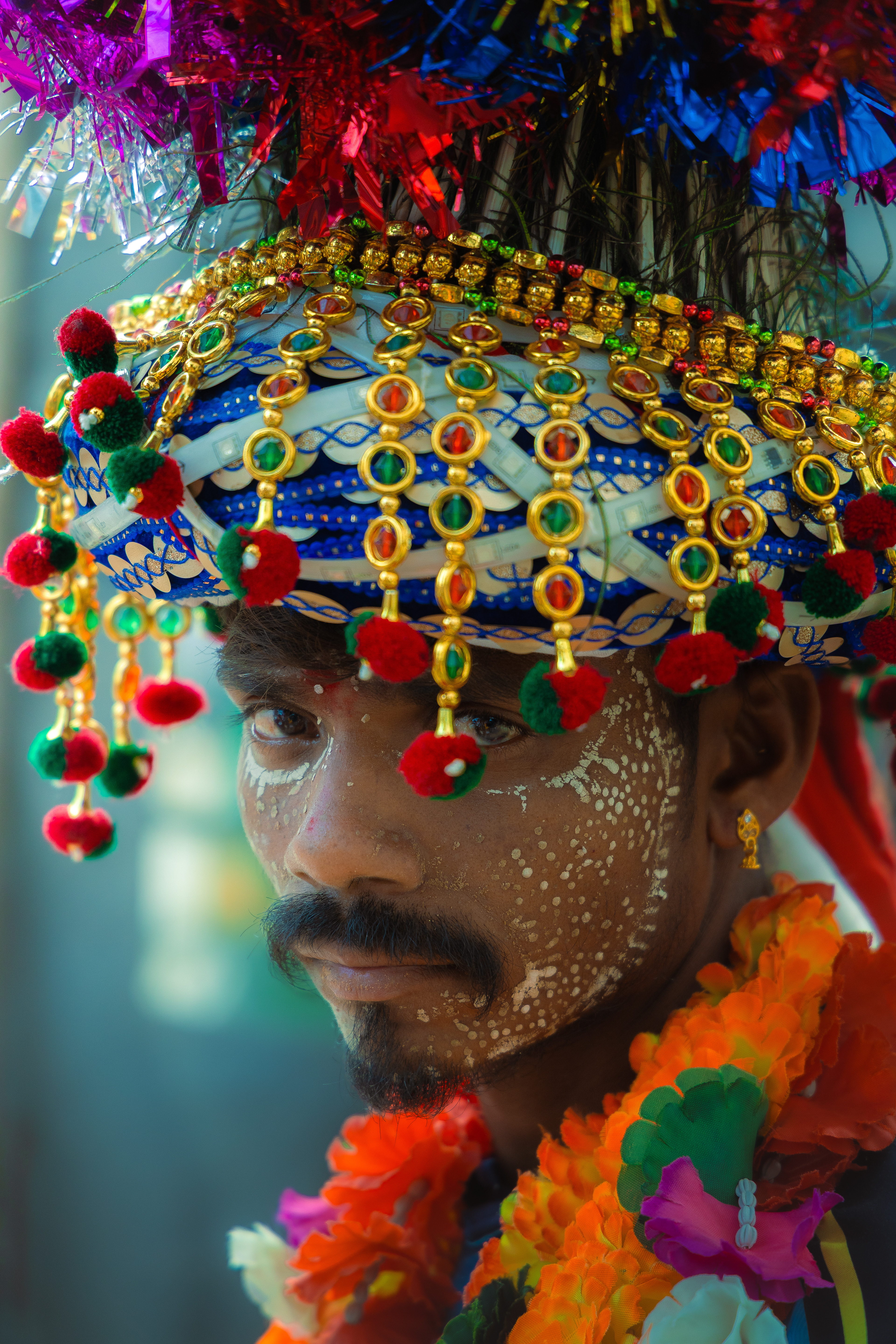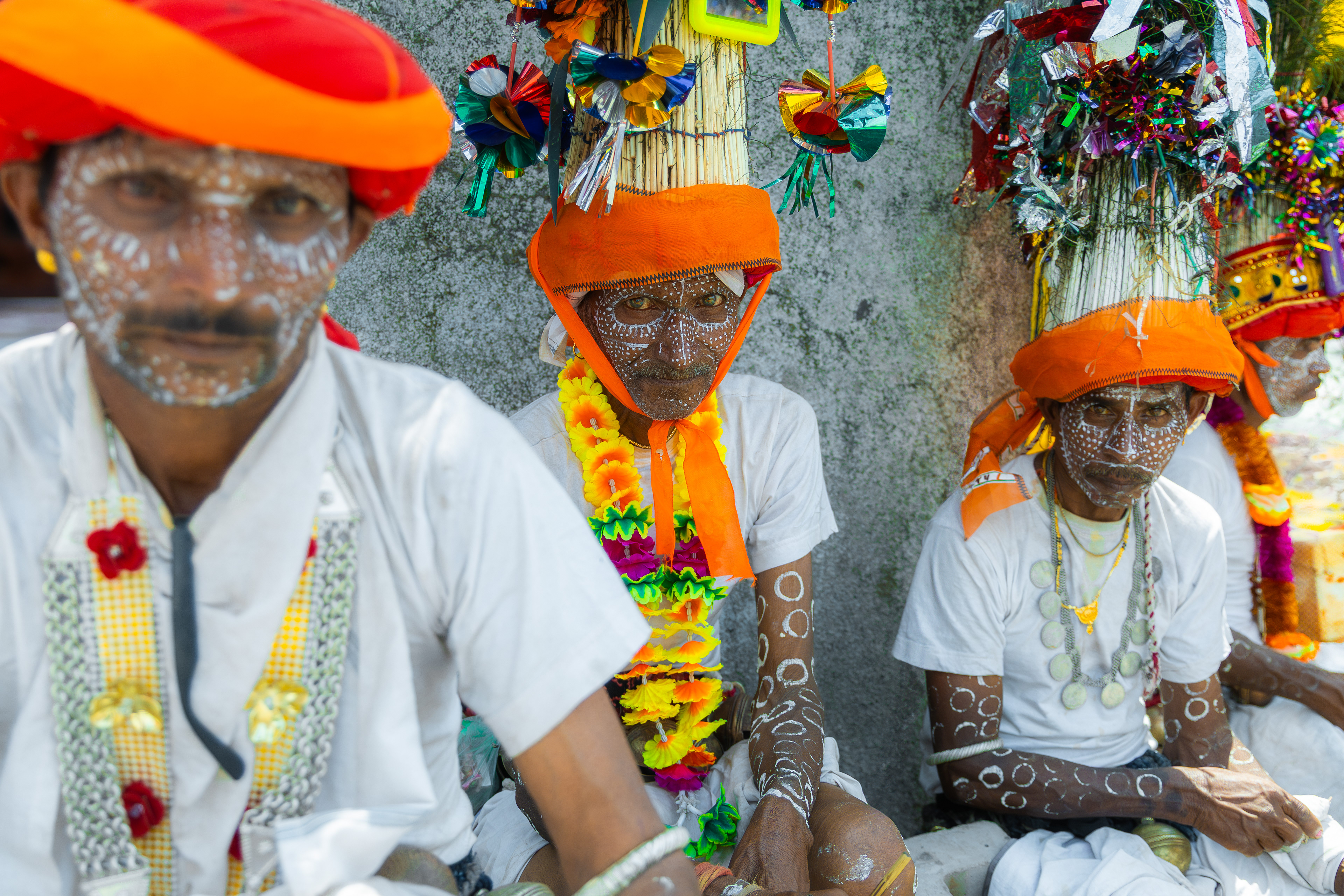
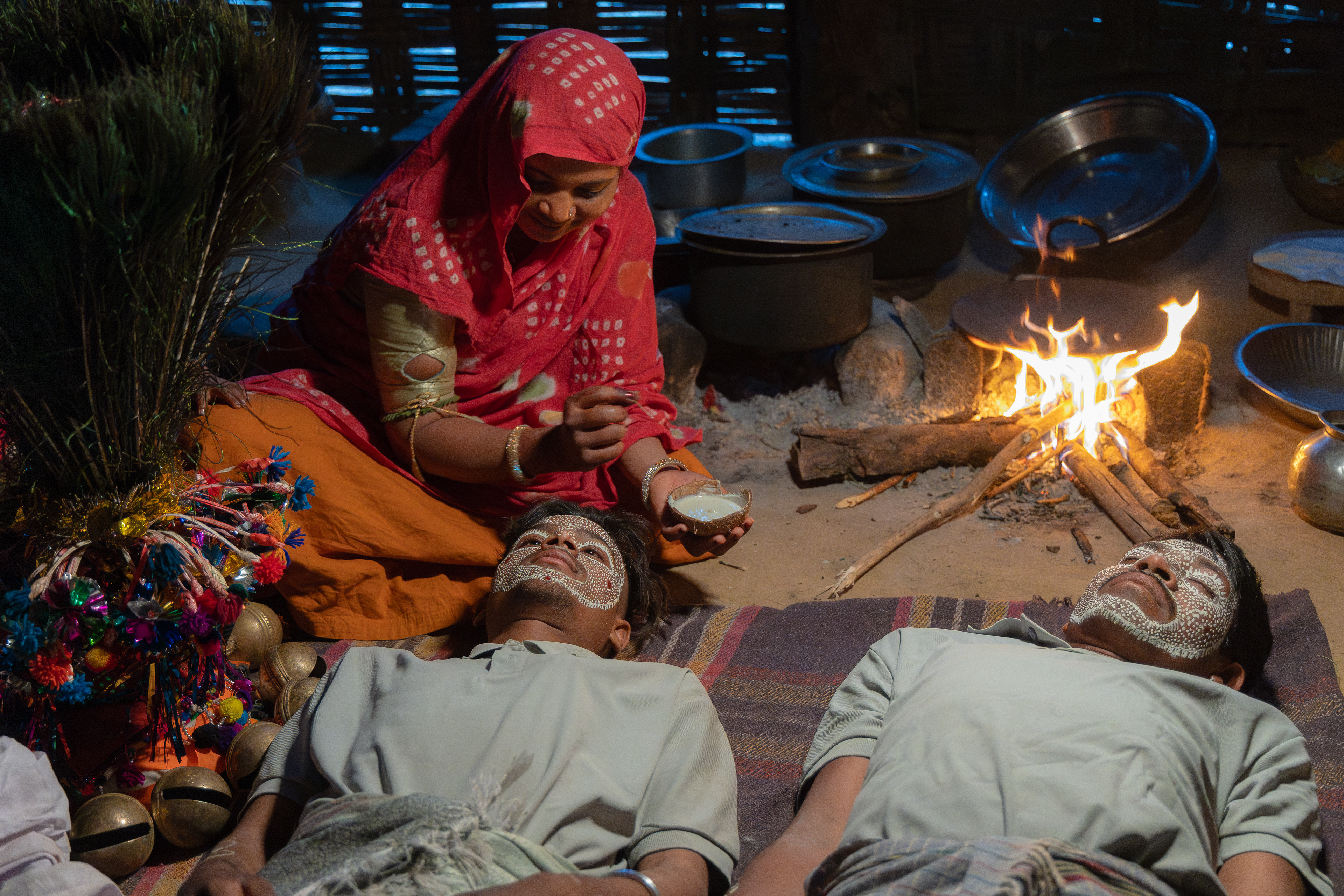
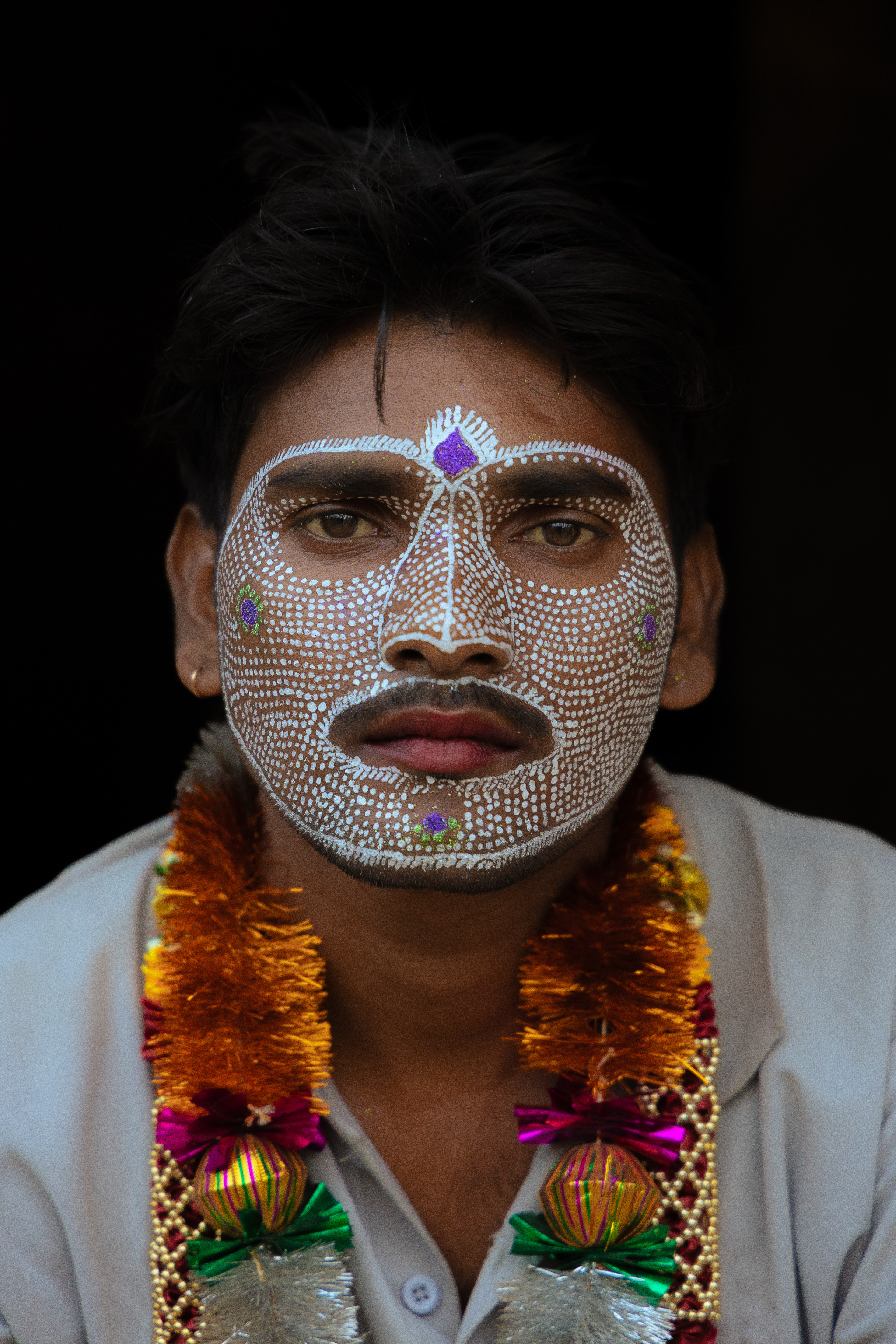
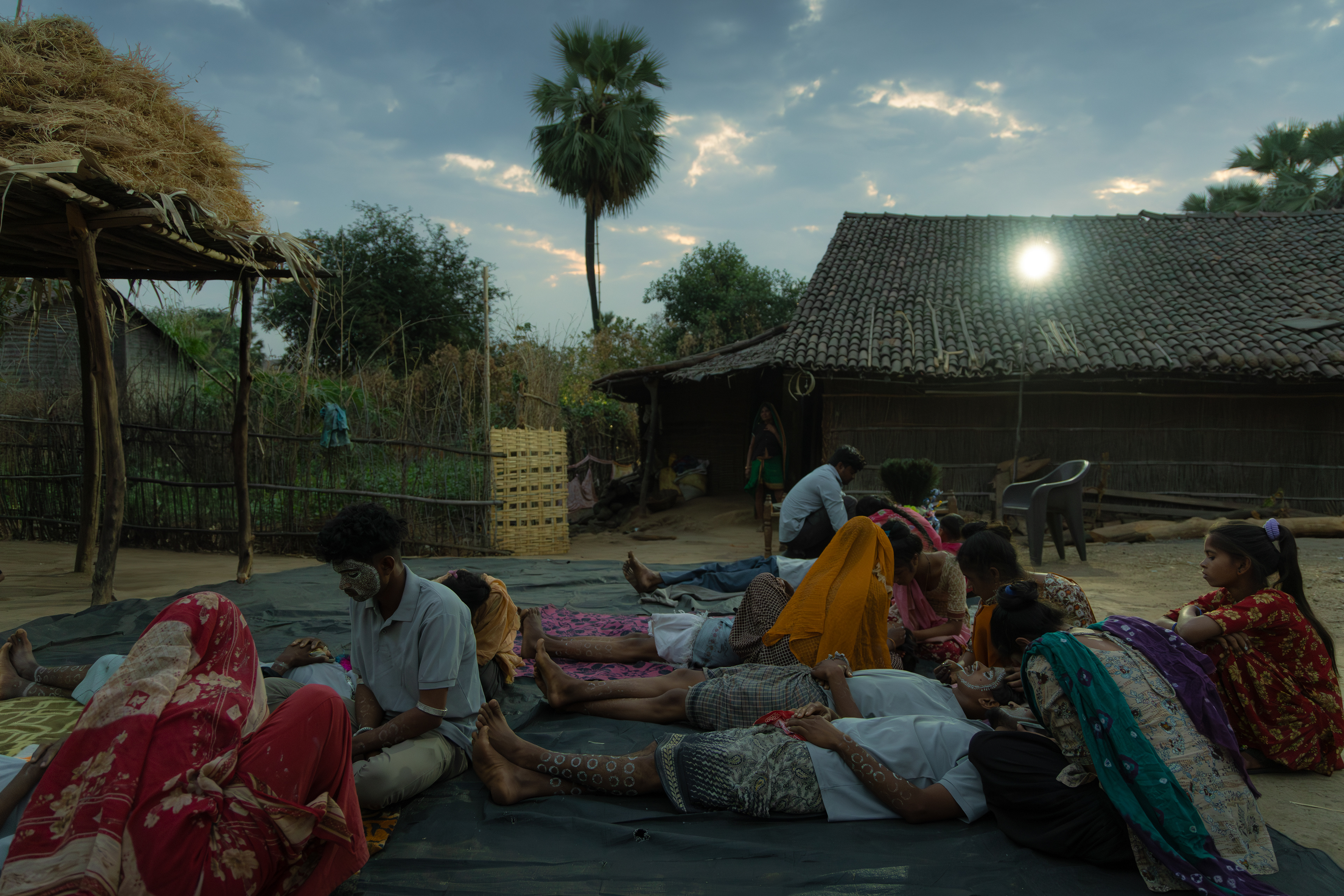
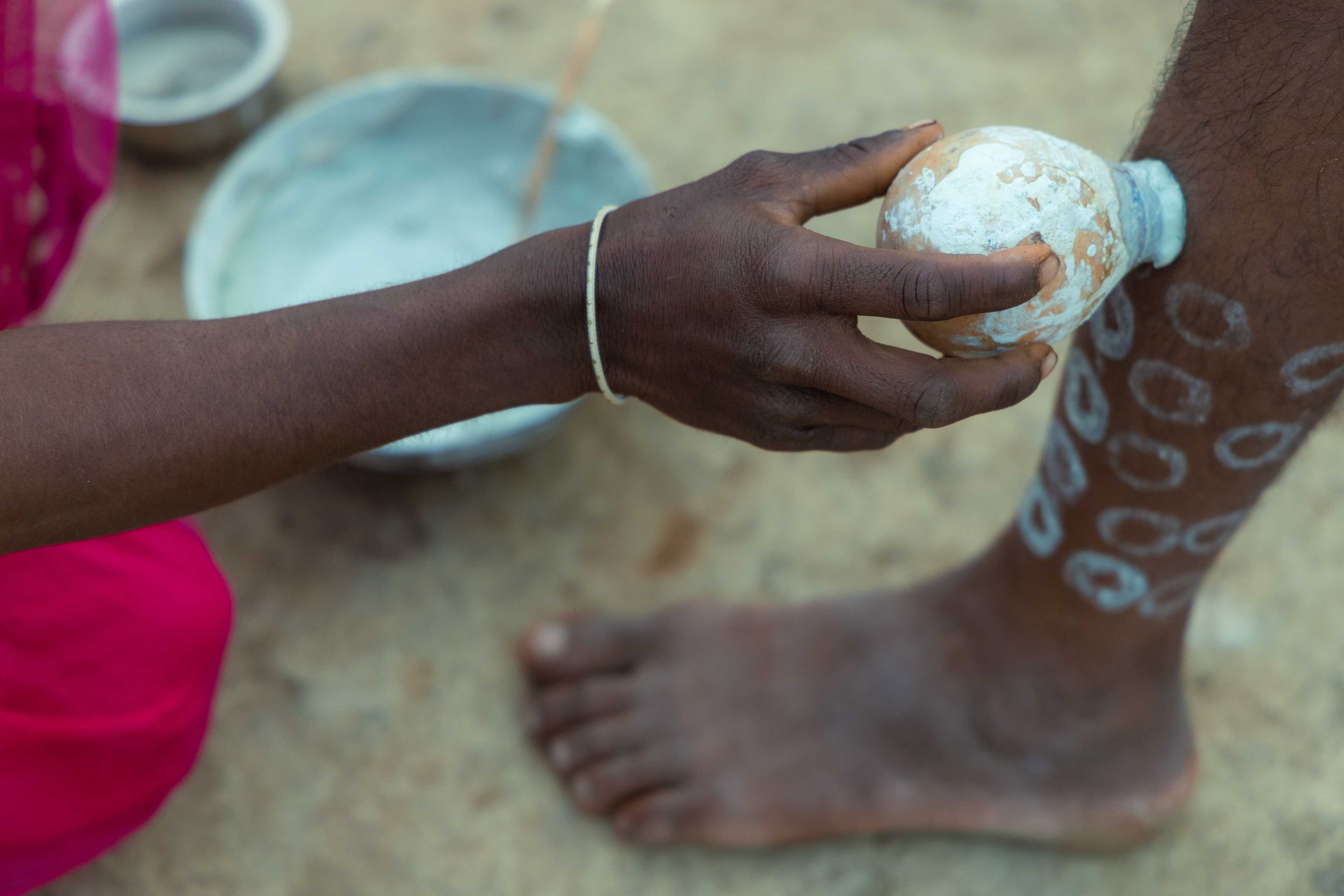
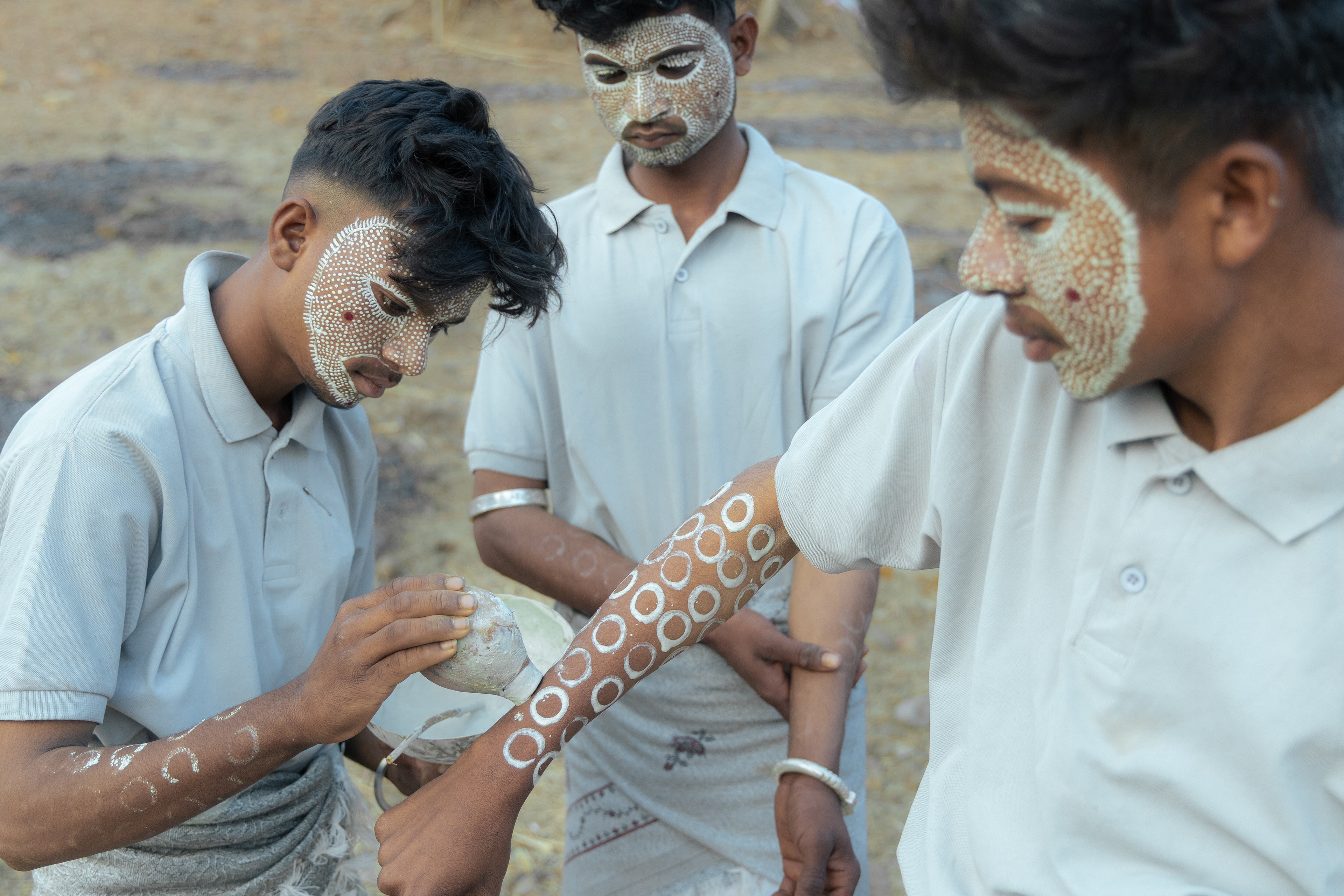
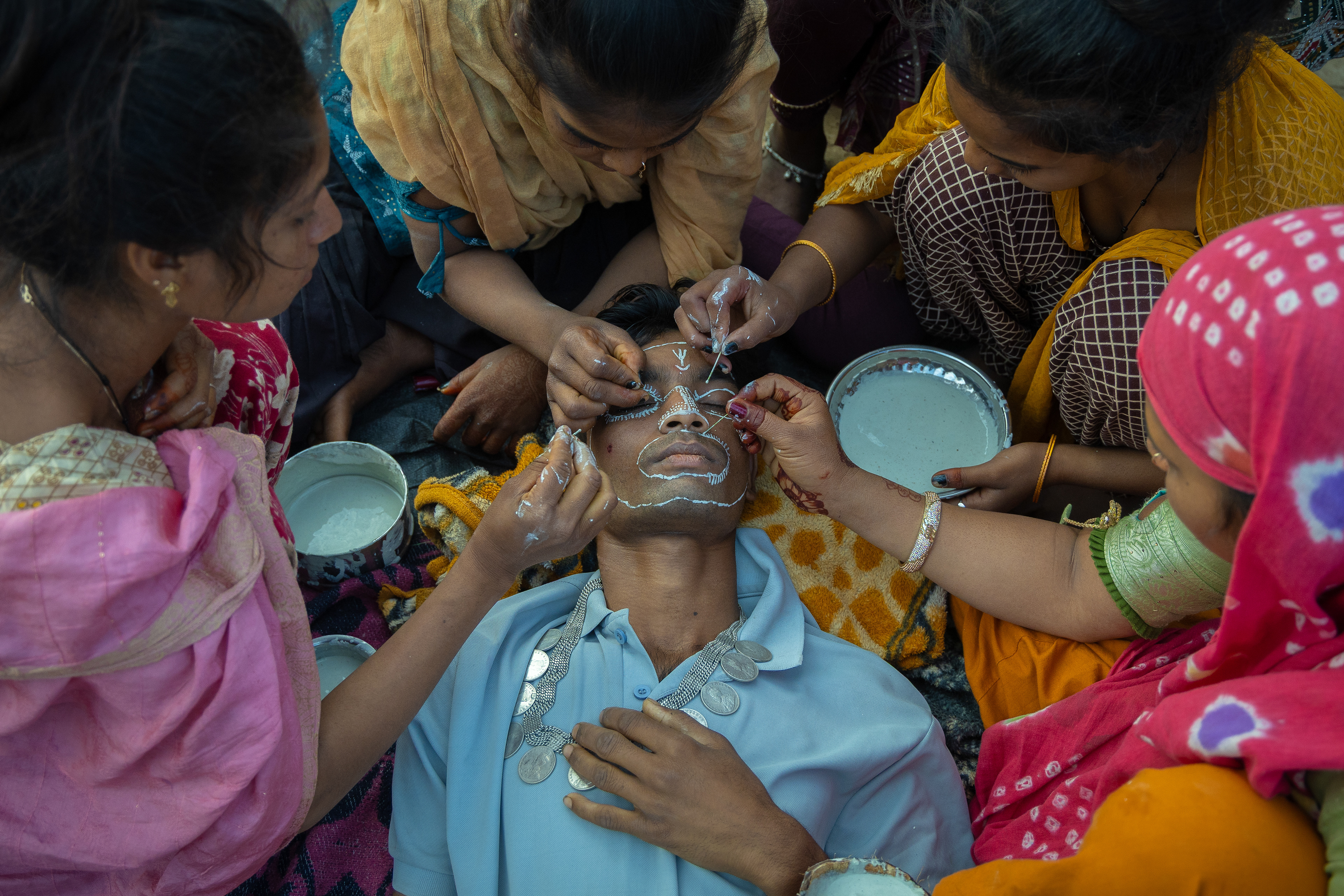
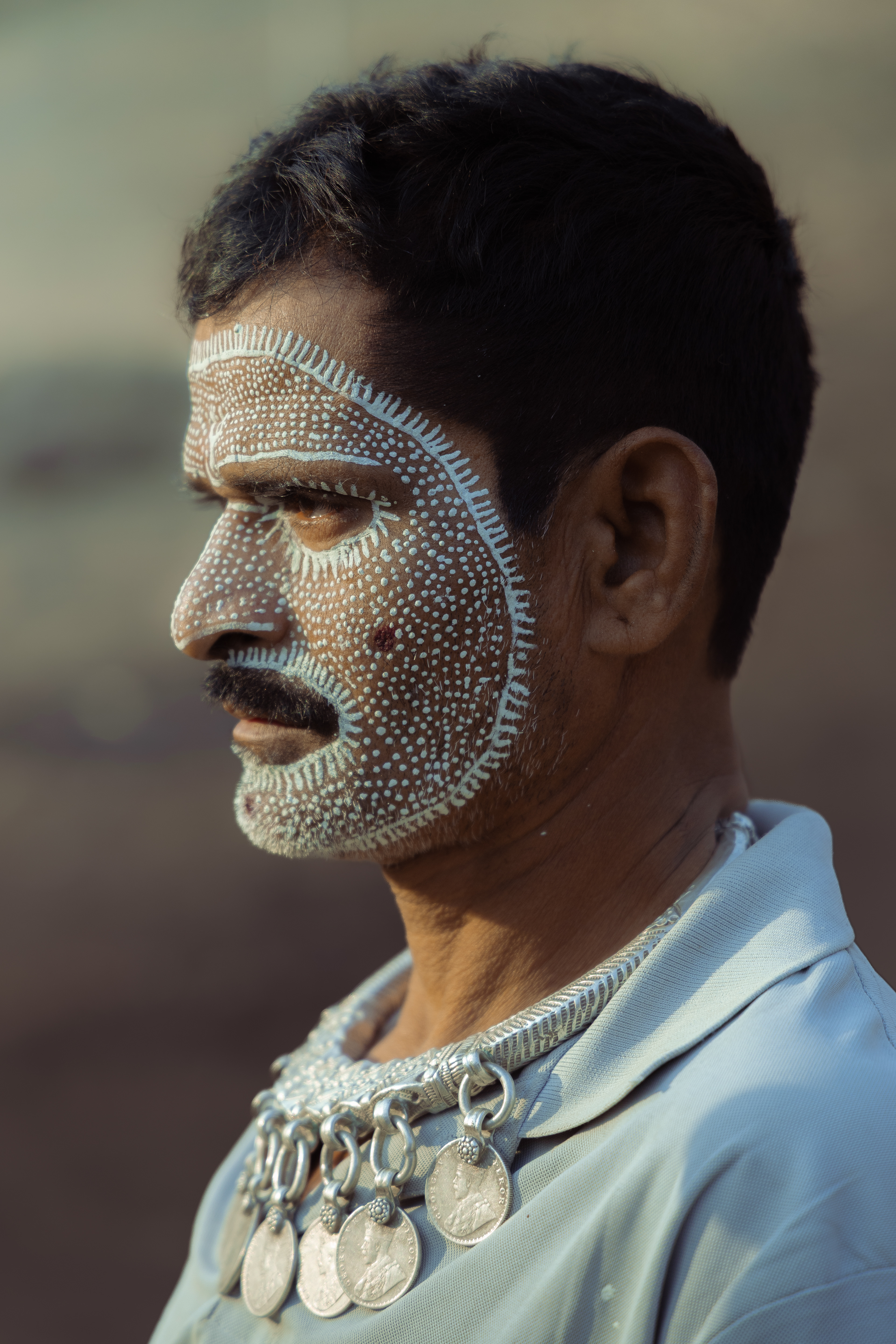
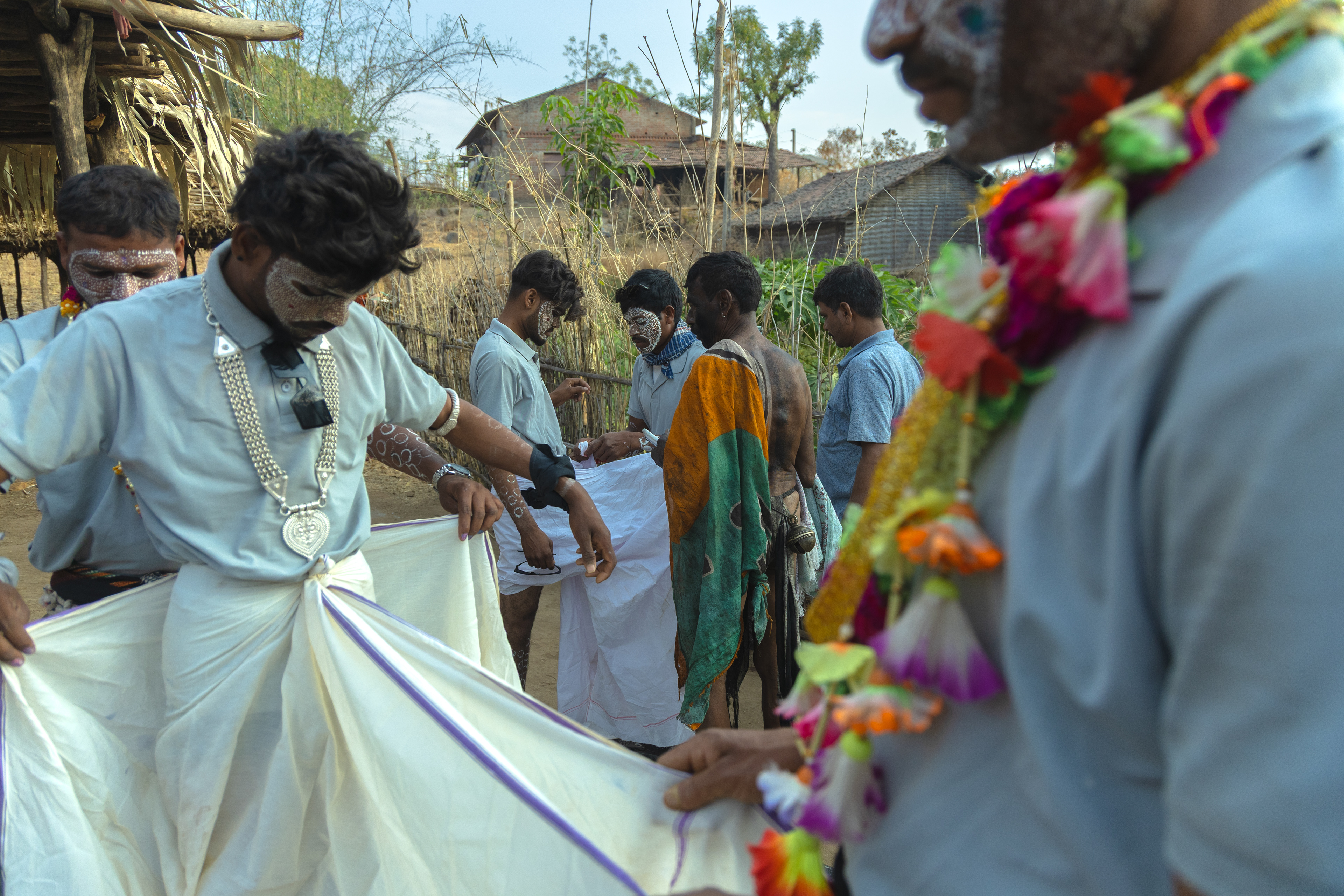
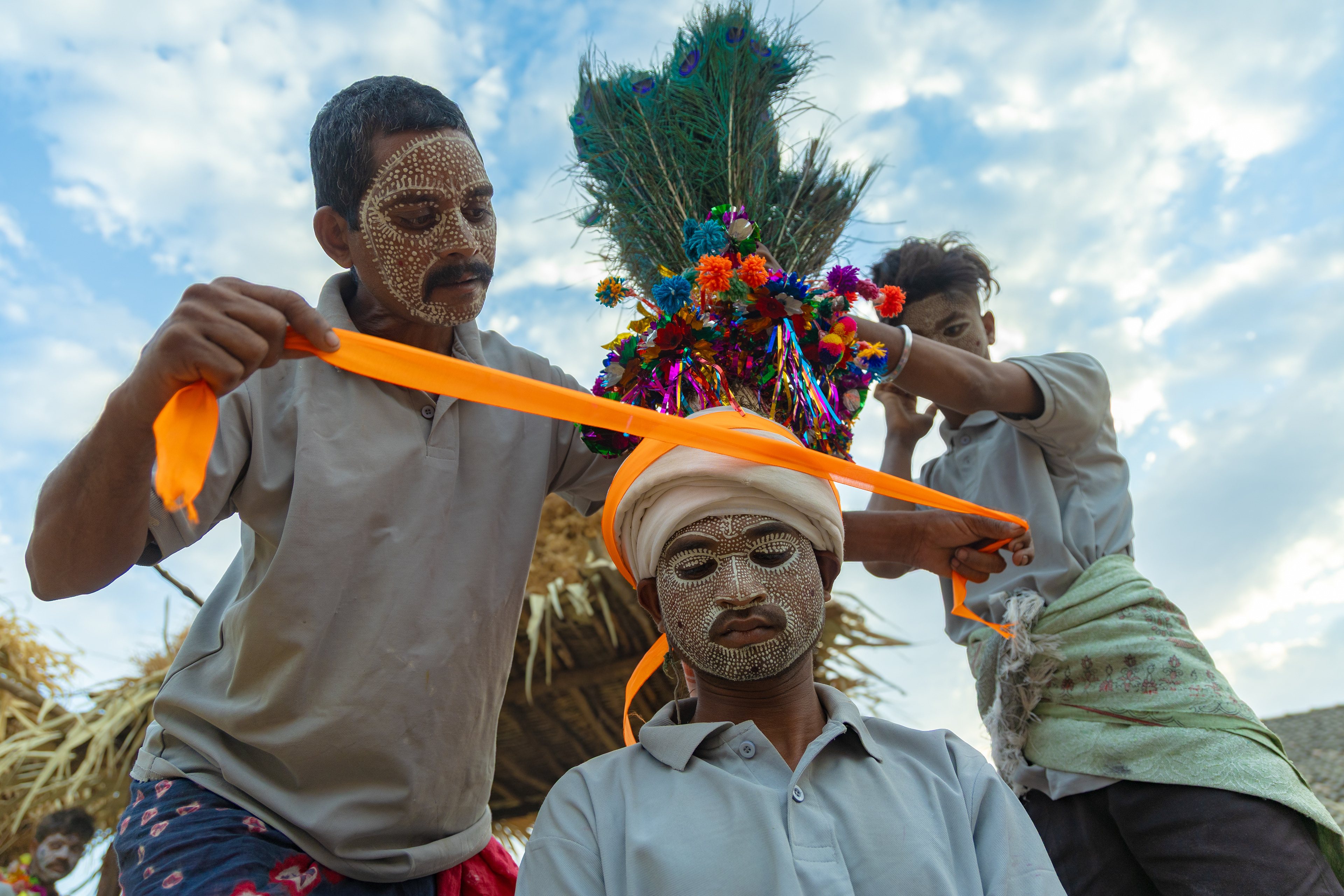
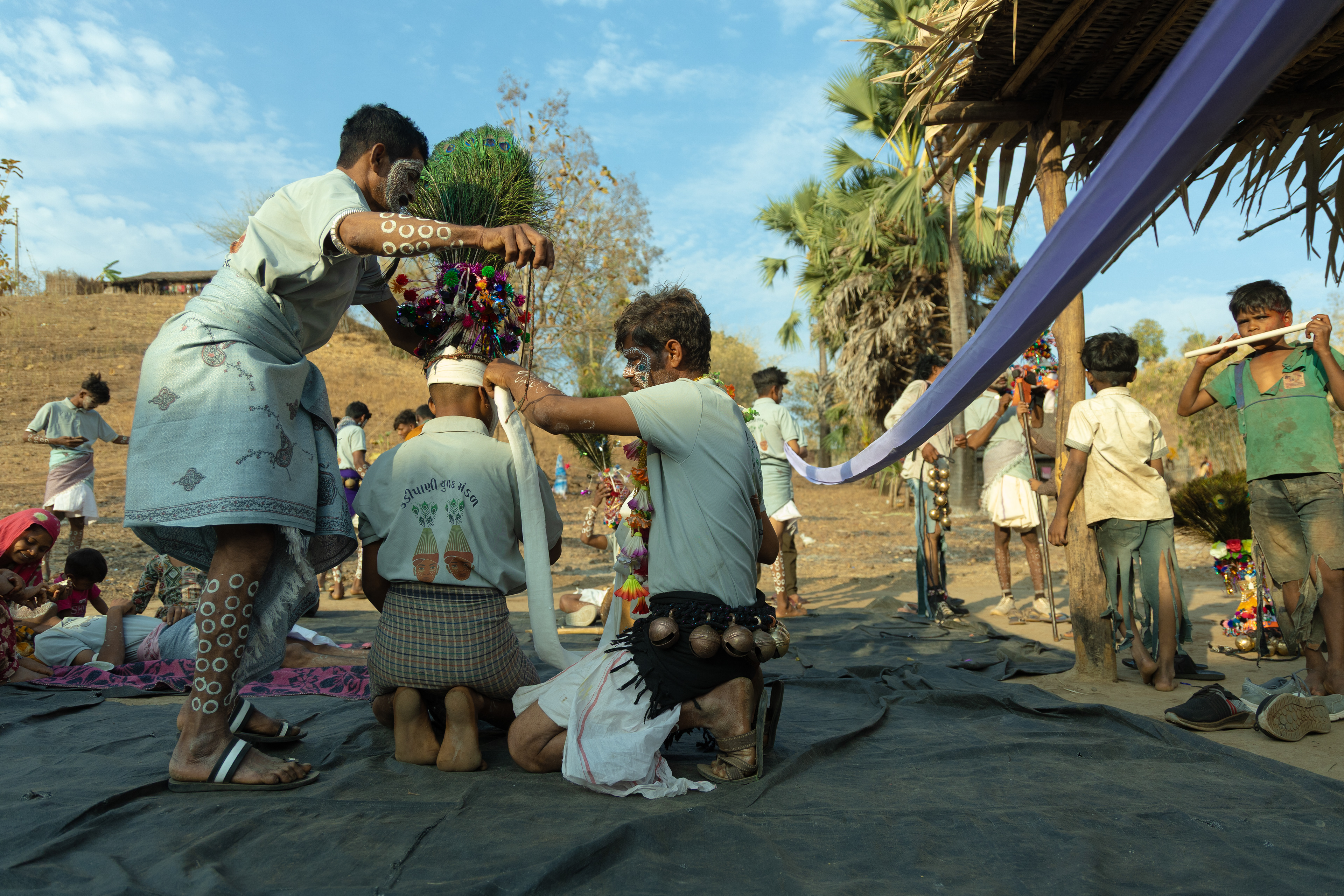
Long before the drums reach Kawant, the festival begins quietly, in courtyards and on tarpaulins spread out in the morning light. In the days after Holi, the Rathwa, an Adivasi community of the Chhota Udepur hills in eastern Gujarat, prepare their bodies for the Gher. Faces and limbs are painted with a white paste of ash and rice flour, worked patiently into dots, circles and fine lines: a visual language said to echo the spotted cats that once moved through these forests. The painting is rarely a solitary act. Mothers, sisters and friends lean in with small bowls and steady hands, and a young man lies still while his face is drawn on by many at once. It is careful, unhurried, and shared. Slowly the transformation gathers: the white dhoti, the rope belt heavy with brass bells, the tall crown bristling with peacock feathers and marigold. What is being assembled here is not a costume but a return, to the village, to kin, and to a rhythm the community renews together, year after year.
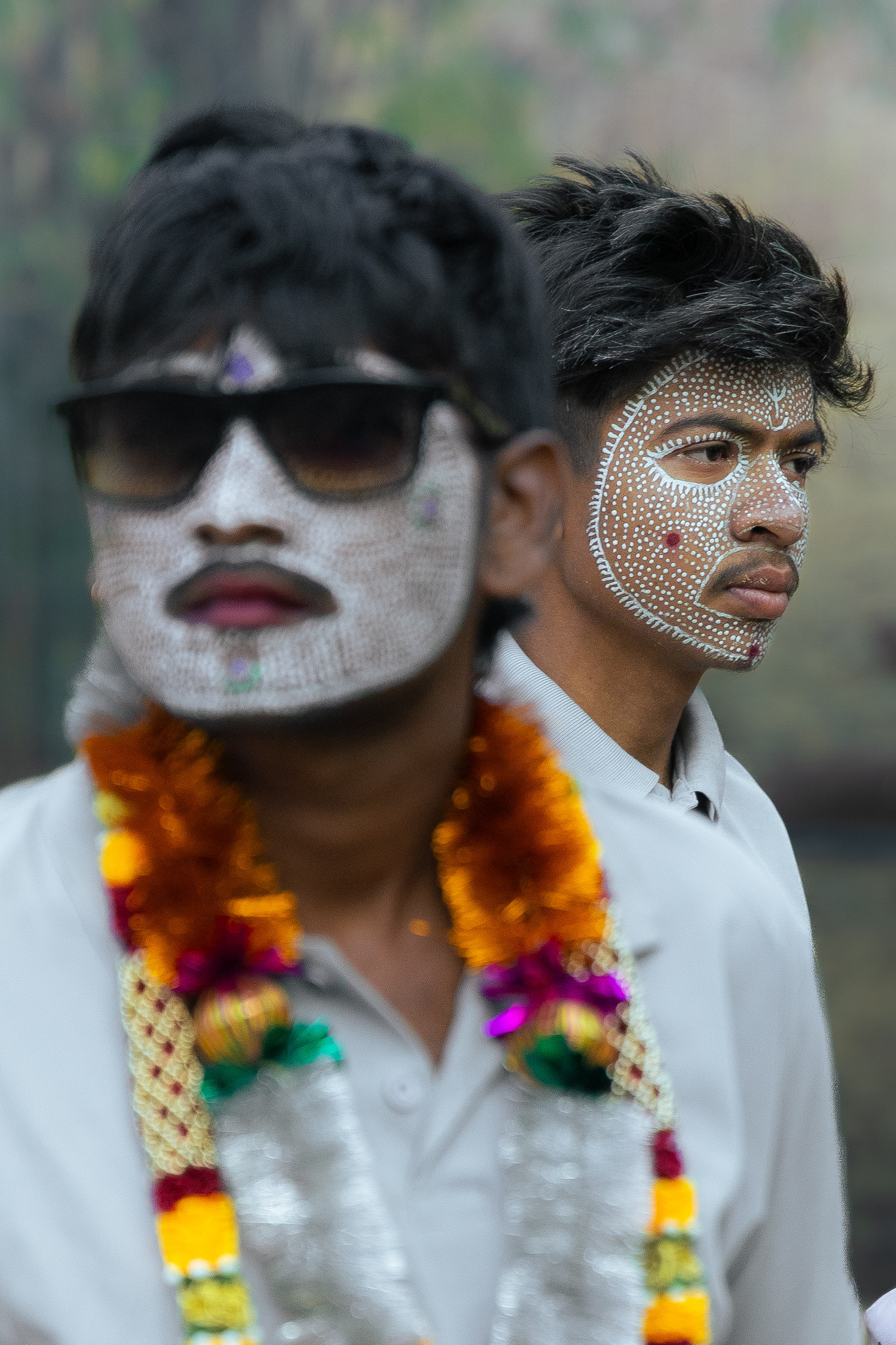
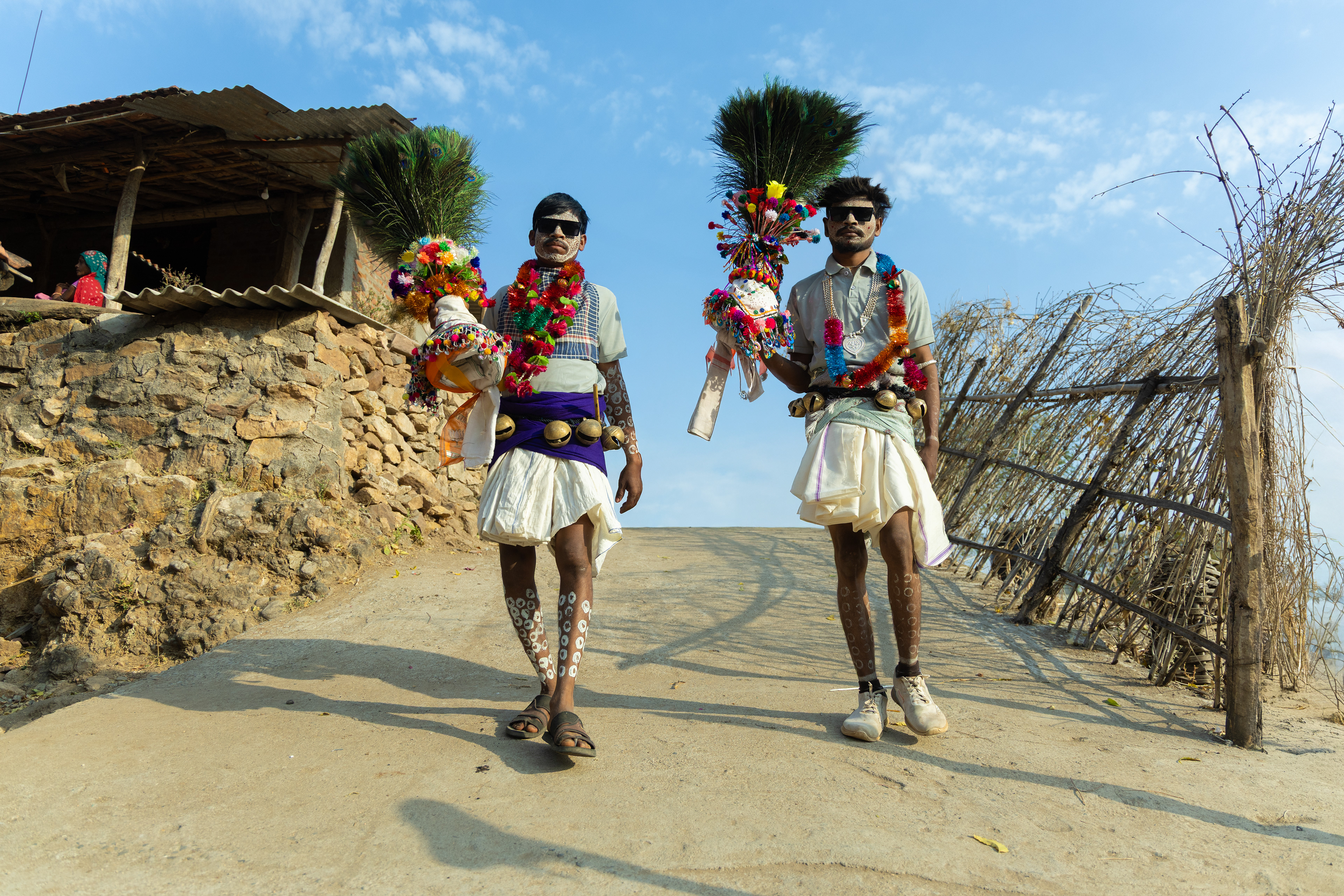
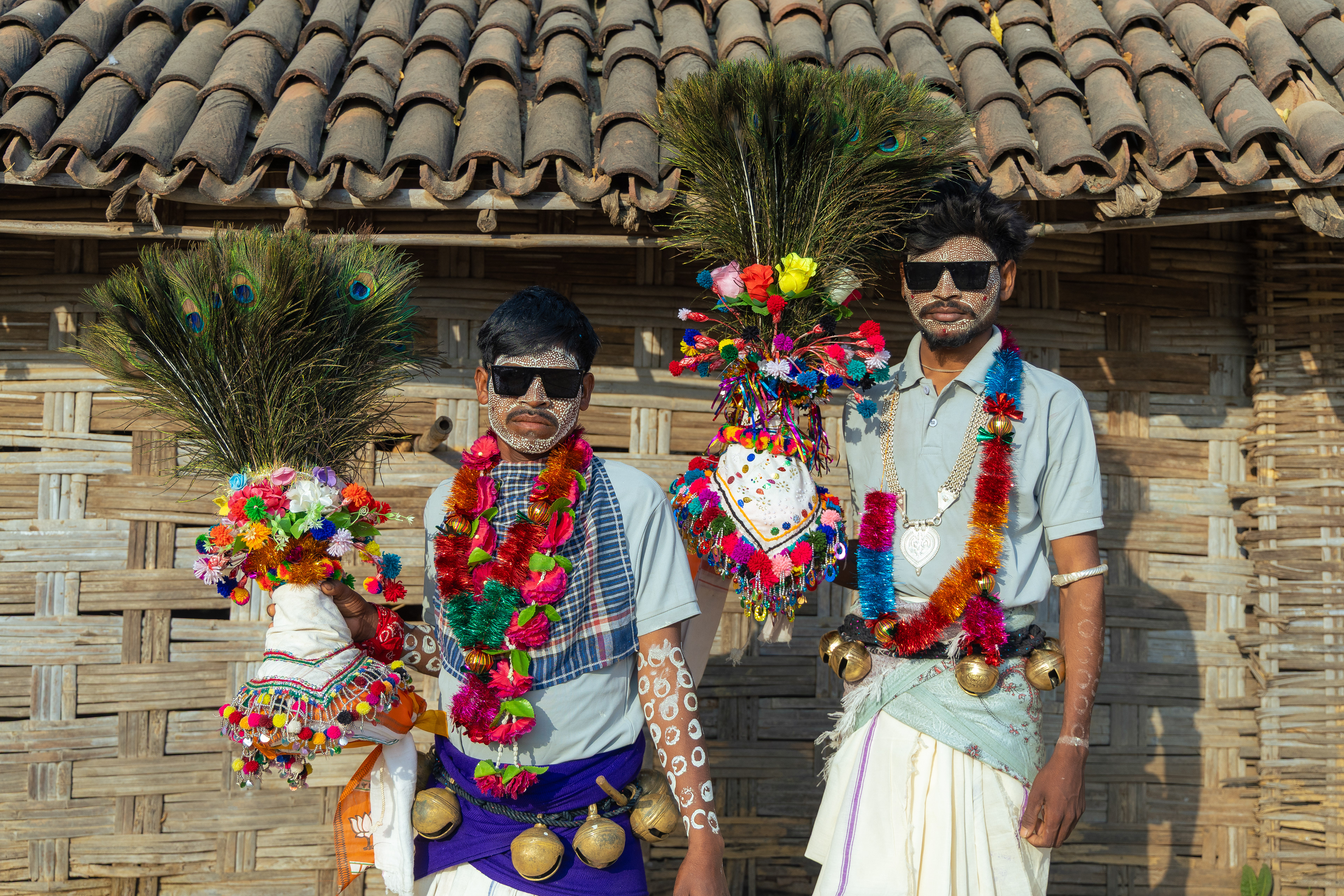
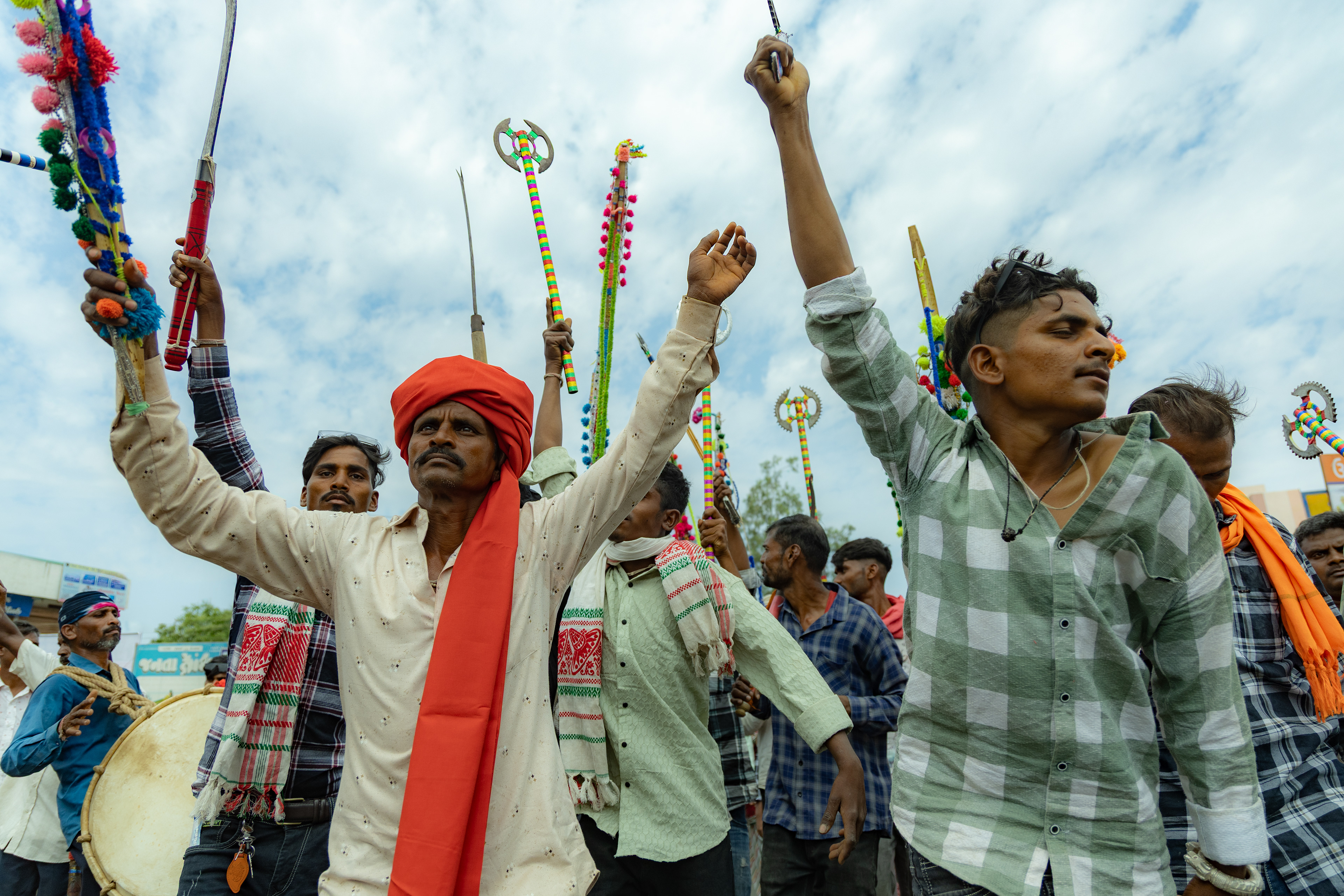
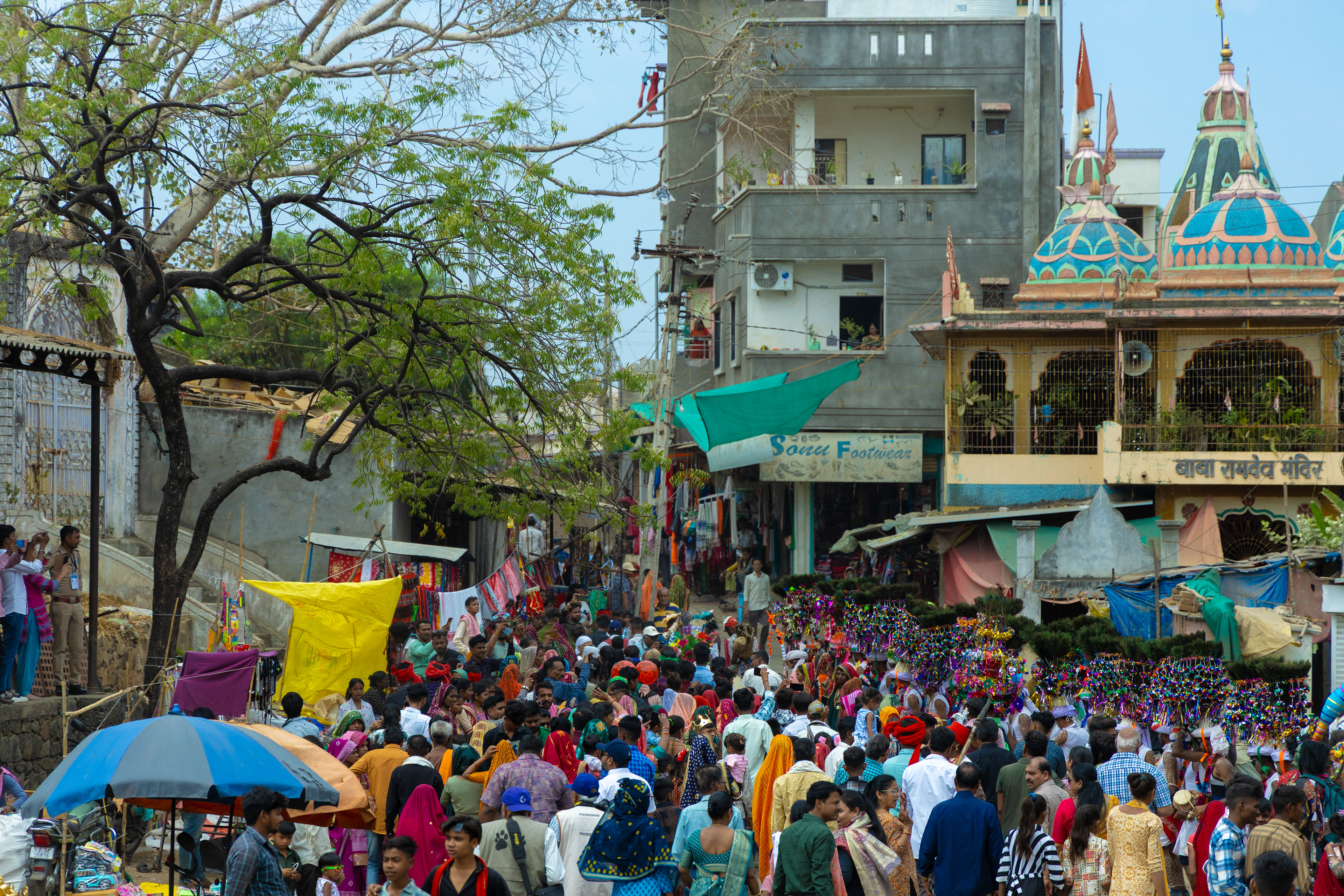
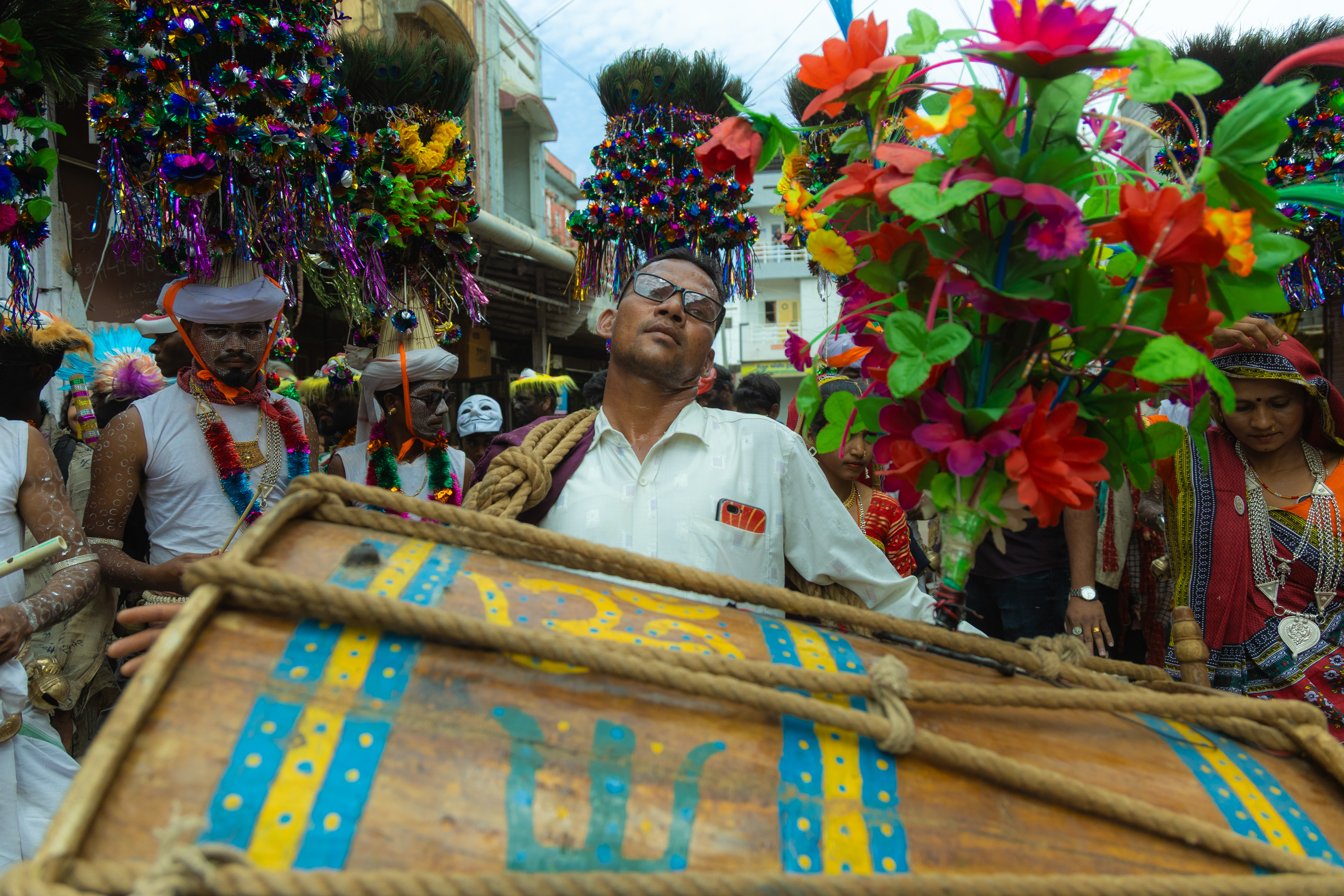
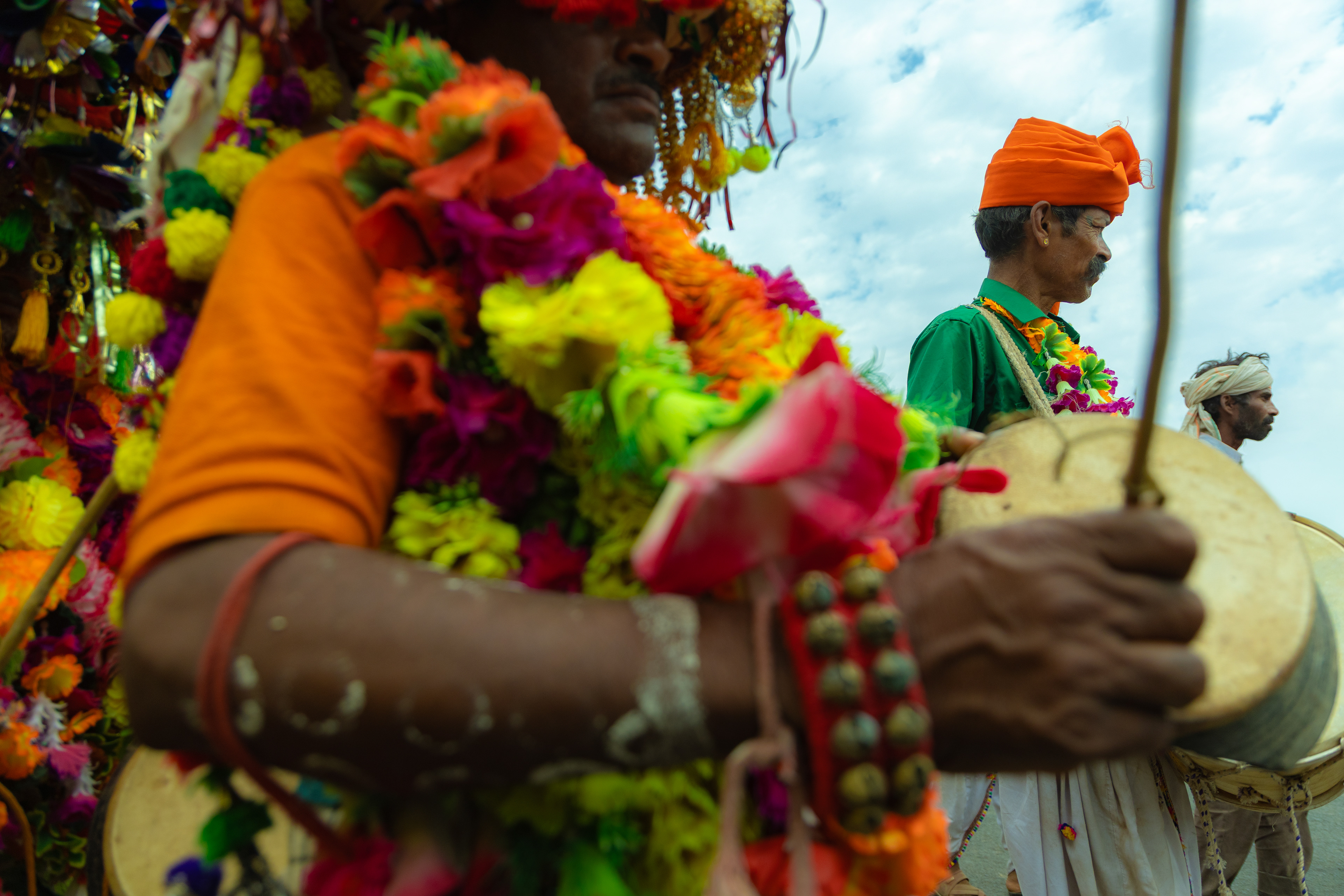
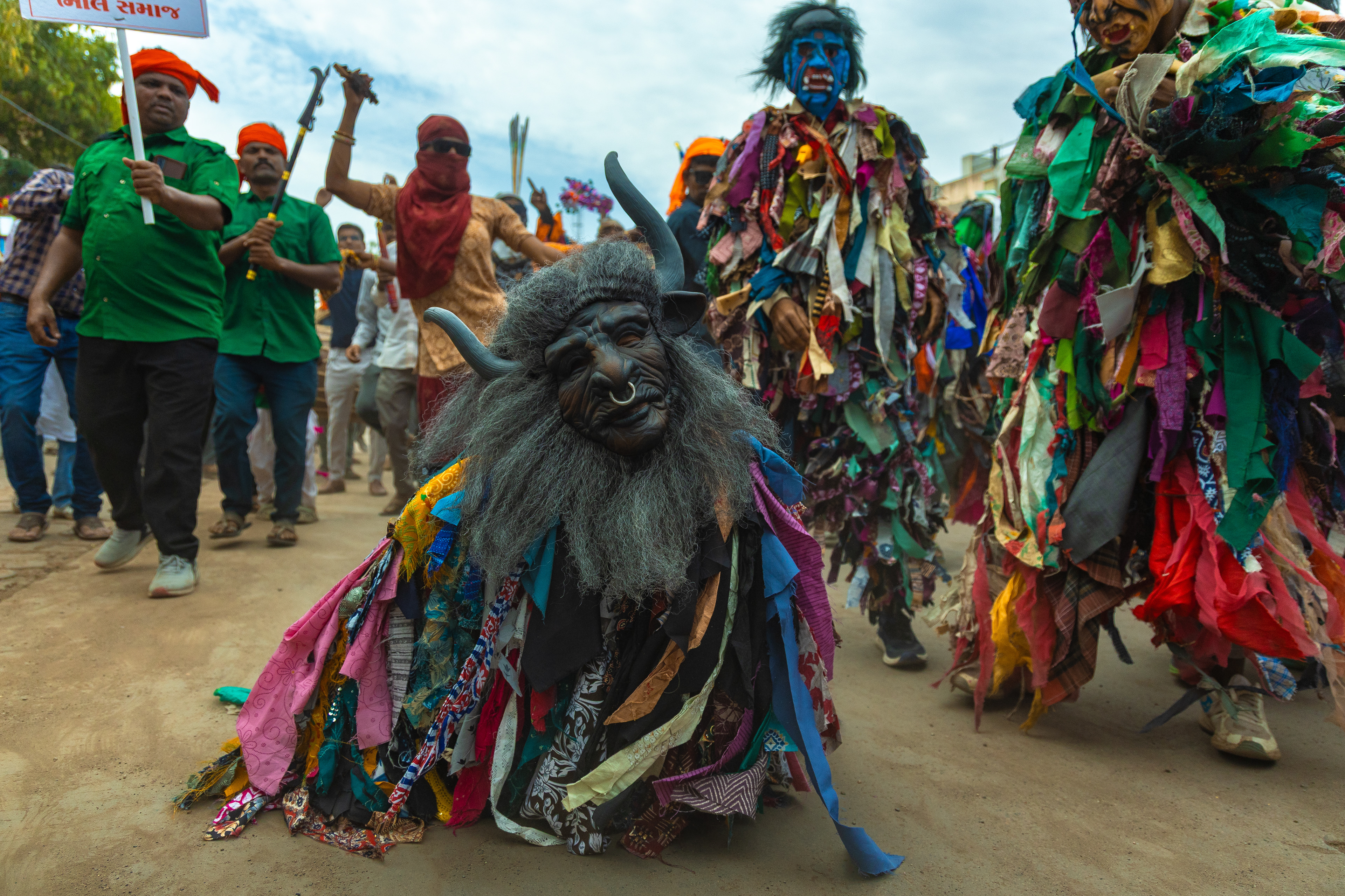
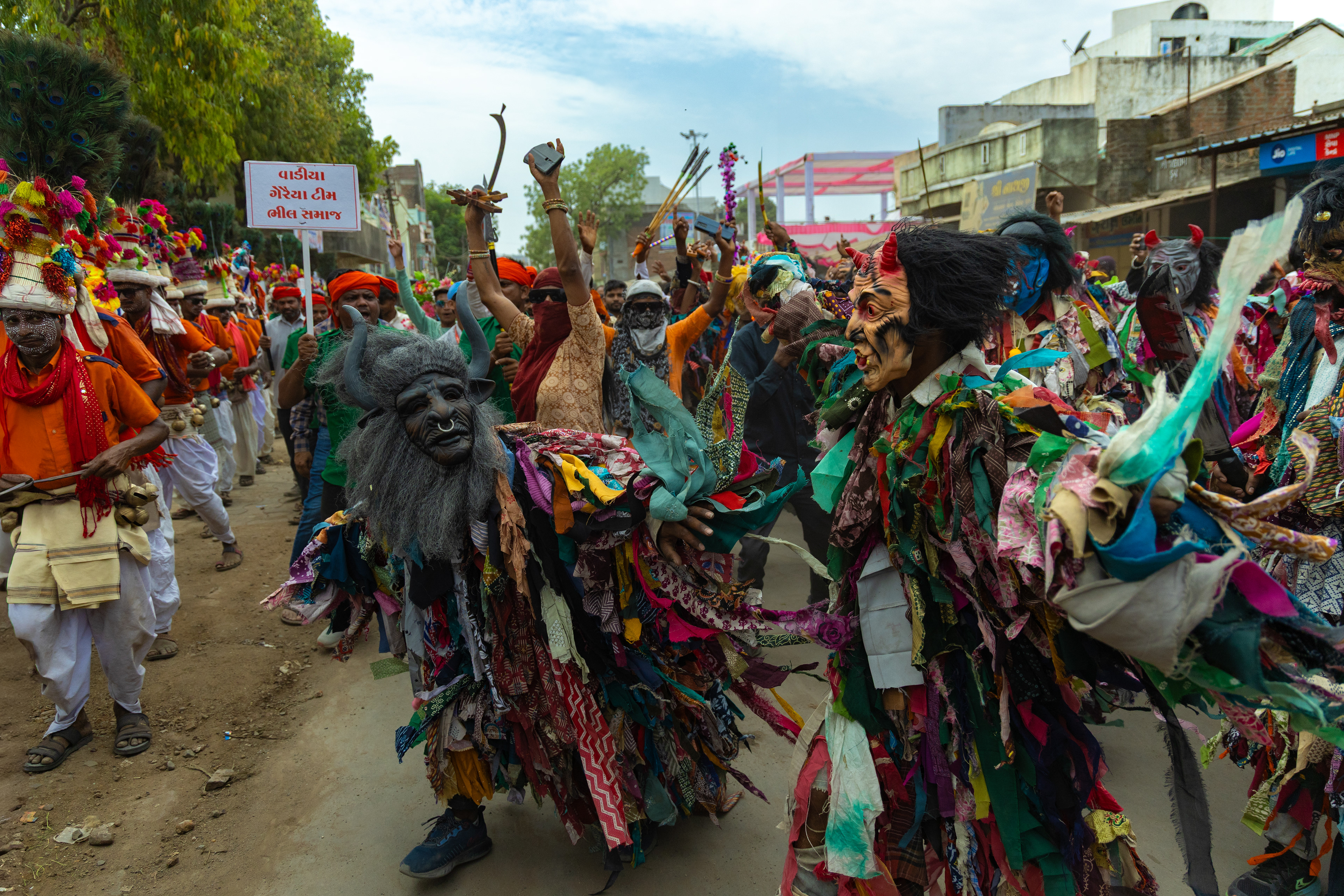
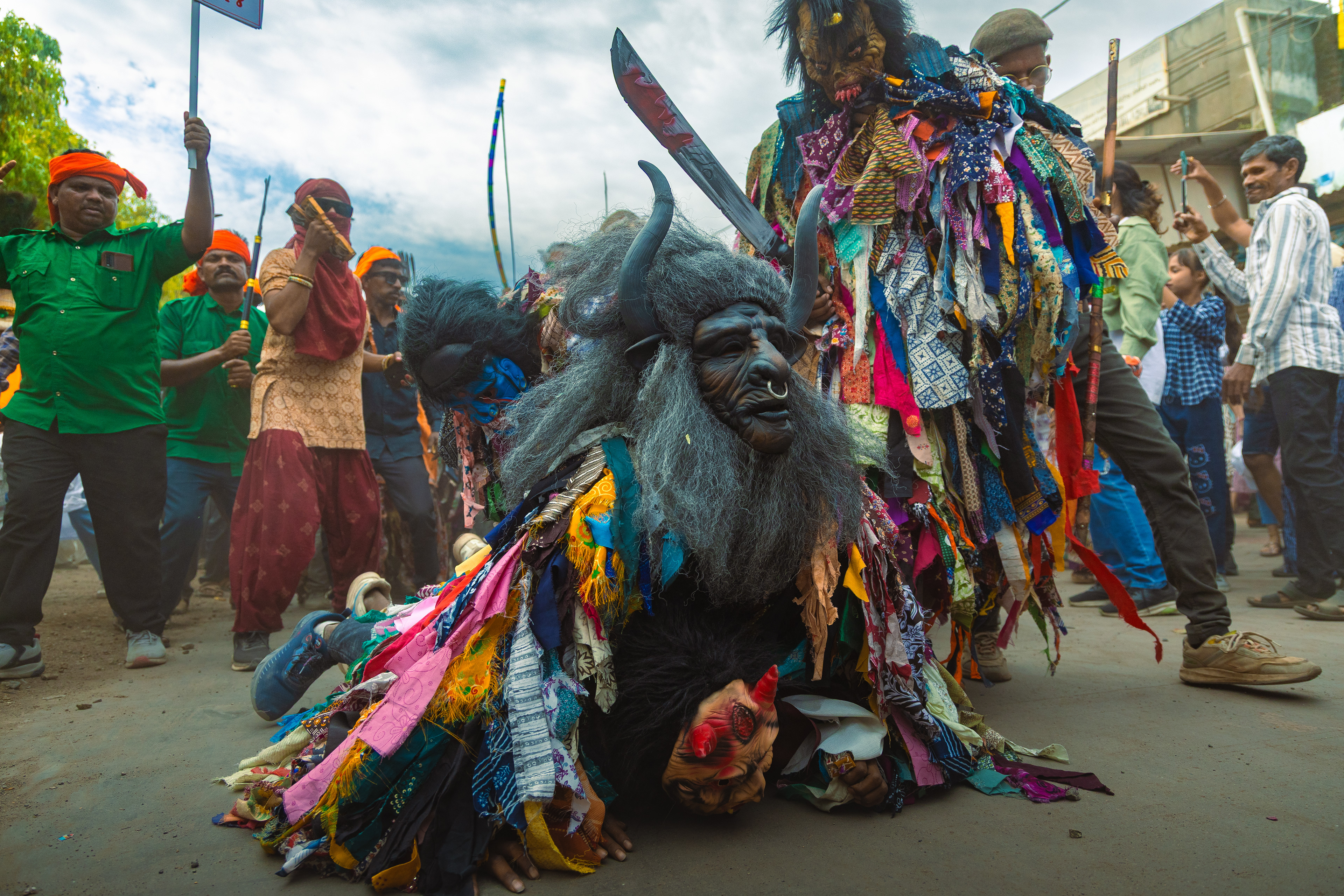
By afternoon, the lanes of Kawant belong to the Gher. For much of the year the Rathwa are a scattered community; work takes many of them away, to distant cities and farms, and the villages of Chhota Udepur thin out. The fair is what draws them back. In the days after Holi they return home, gathering from across Gujarat and the borderlands of Madhya Pradesh and Rajasthan, until the small town swells into a single, moving body. The drums set the pace, and the Gherriyas, the "peacock men," answer it. On every third beat they swing their hips so the bells at their waists ring against the percussion, breaking and remaking the rhythm as they whirl. Peacock crowns tilt above the crowd, garlands blaze orange and magenta, and the market fills with music, colour and reunion. The Gher is a harvest thanksgiving, but it is also an anchor: the fixed point in the year when a dispersed community reconvenes on home ground, and, in feathers, bells and painted skin, affirms that it is still here, and still itself.