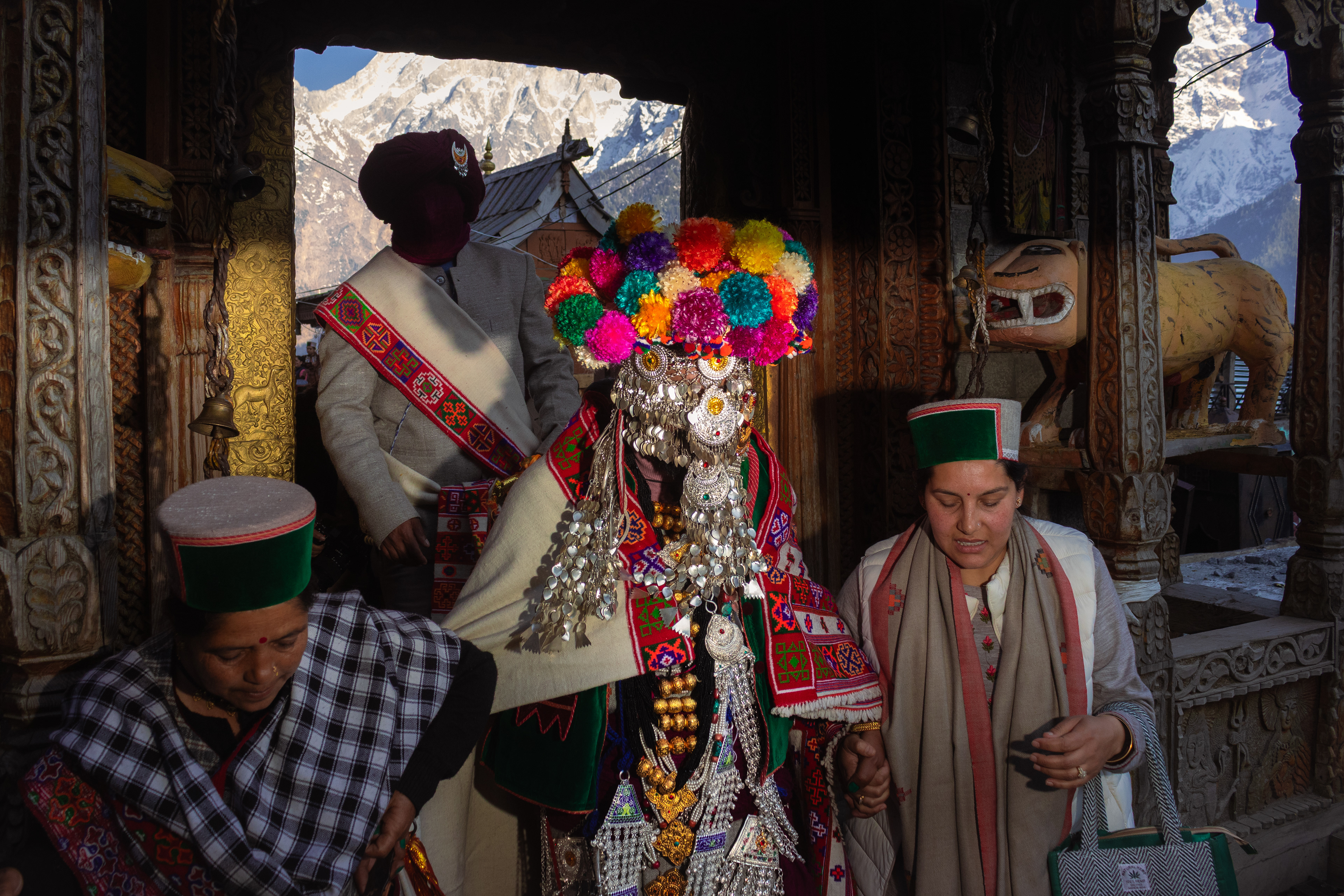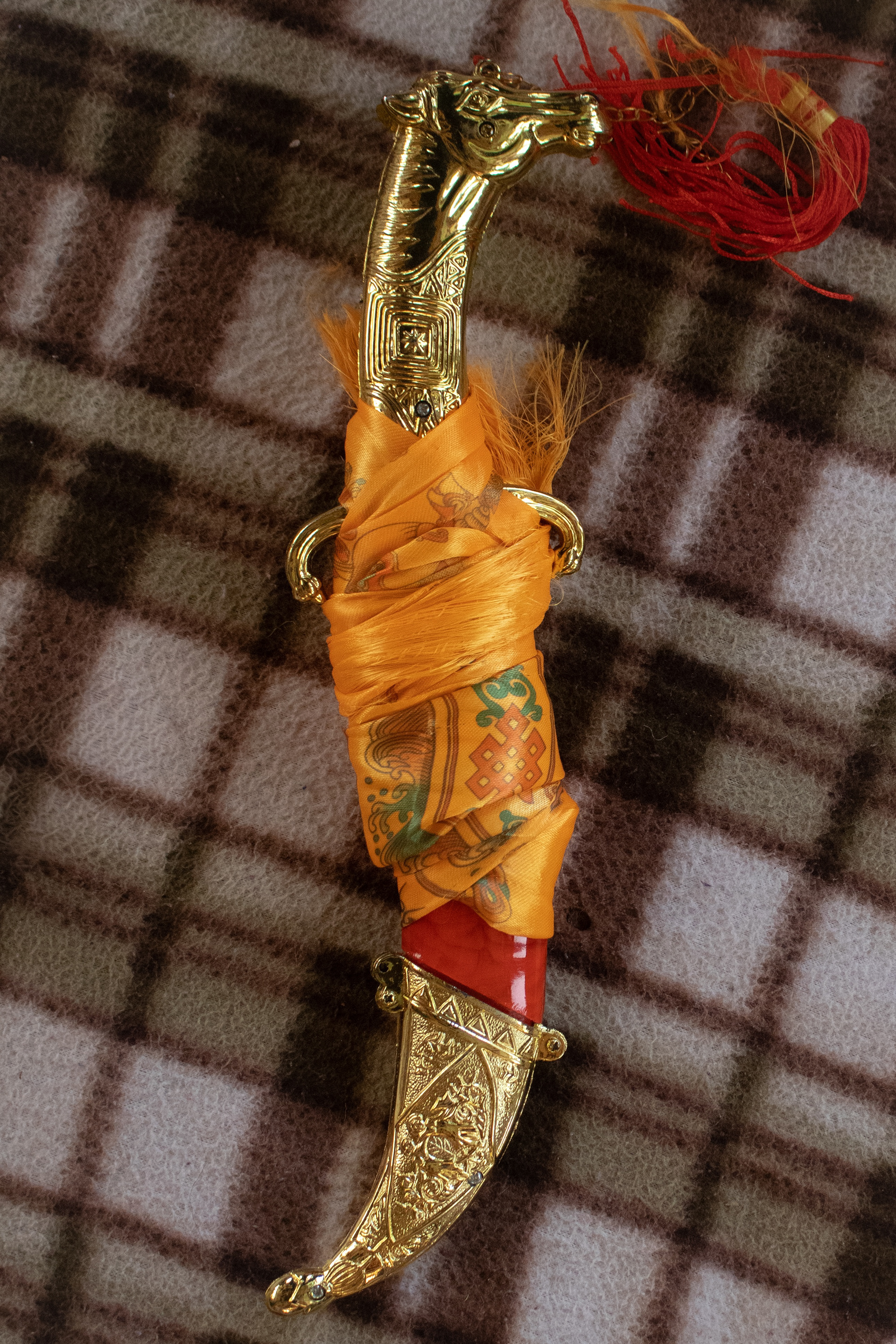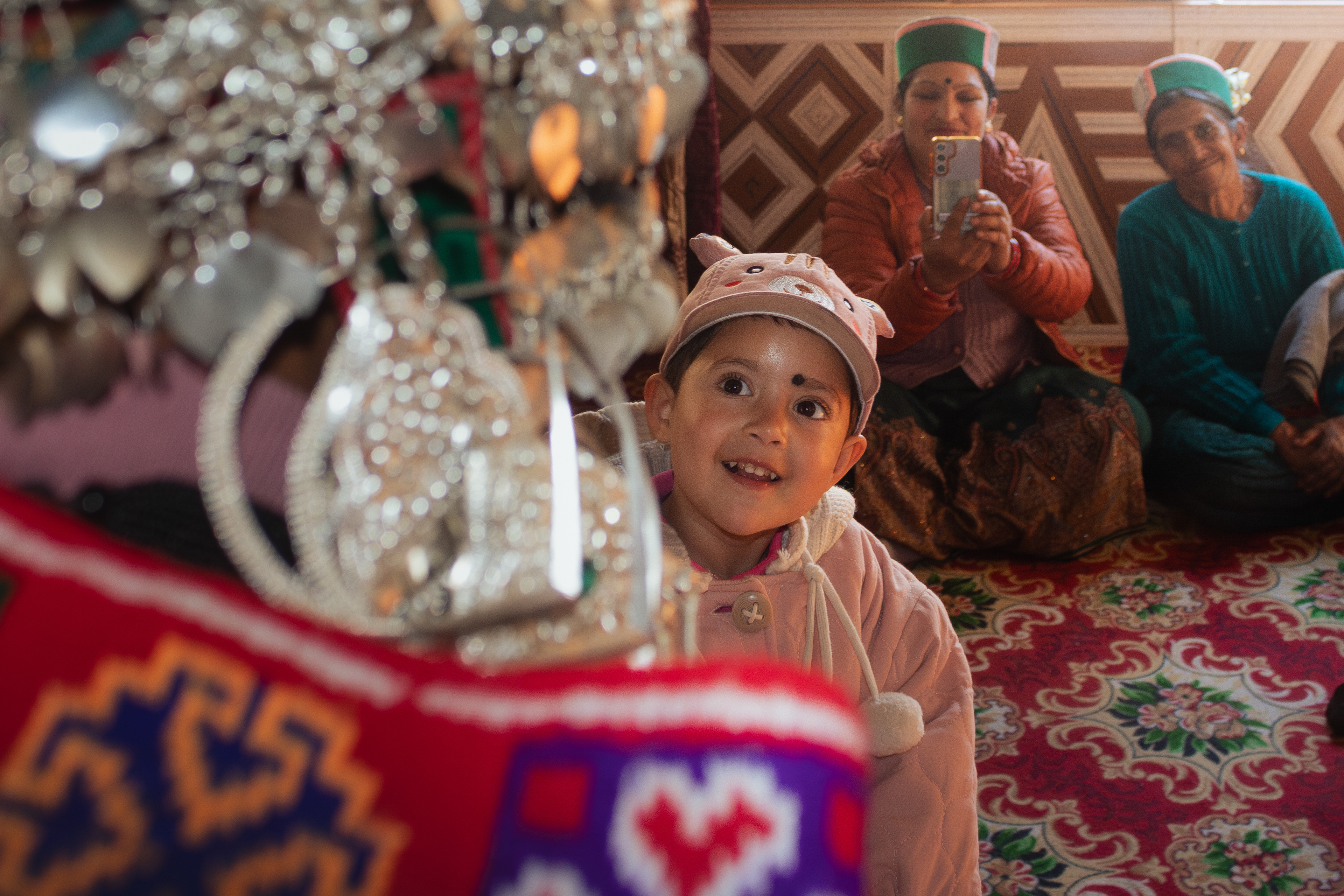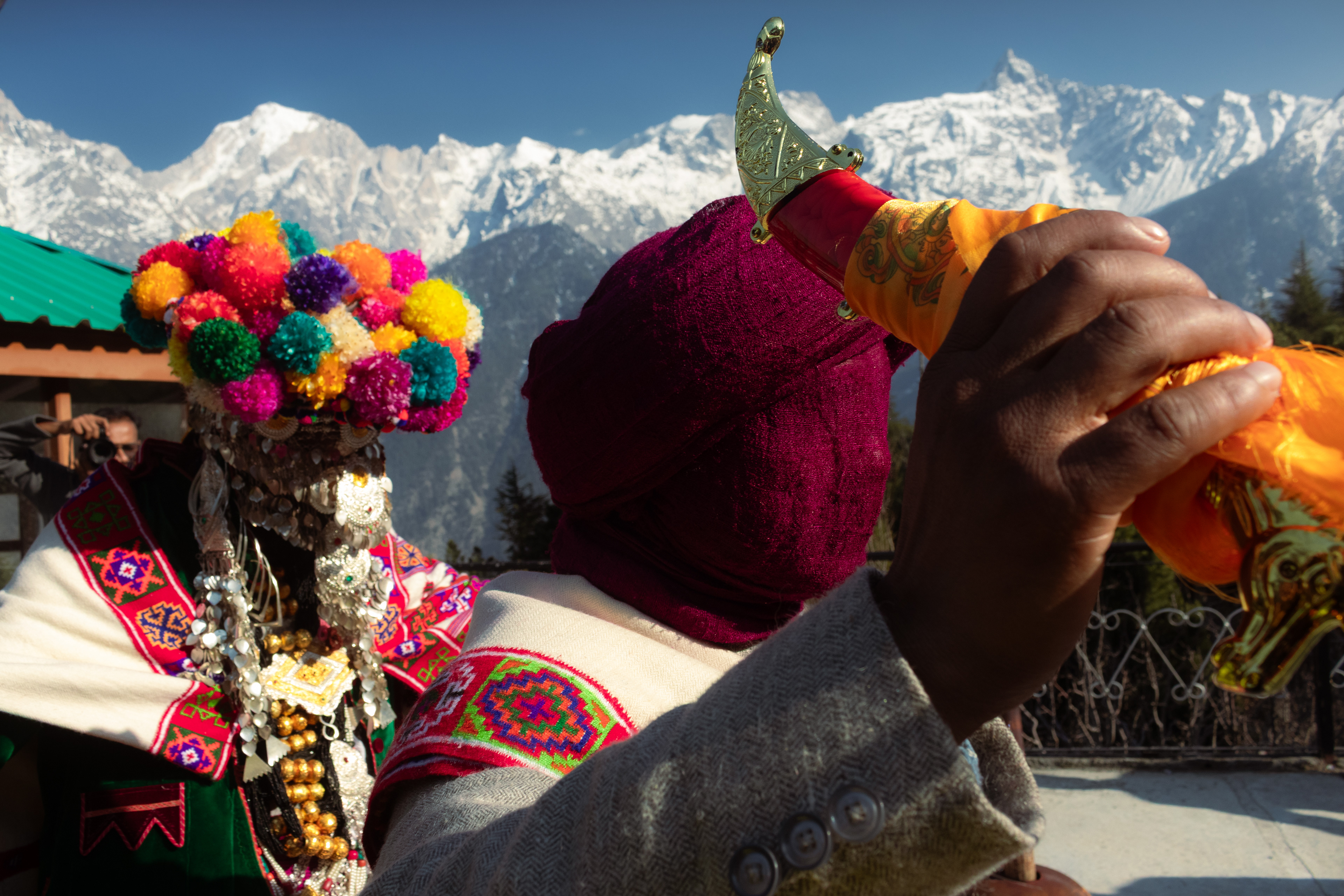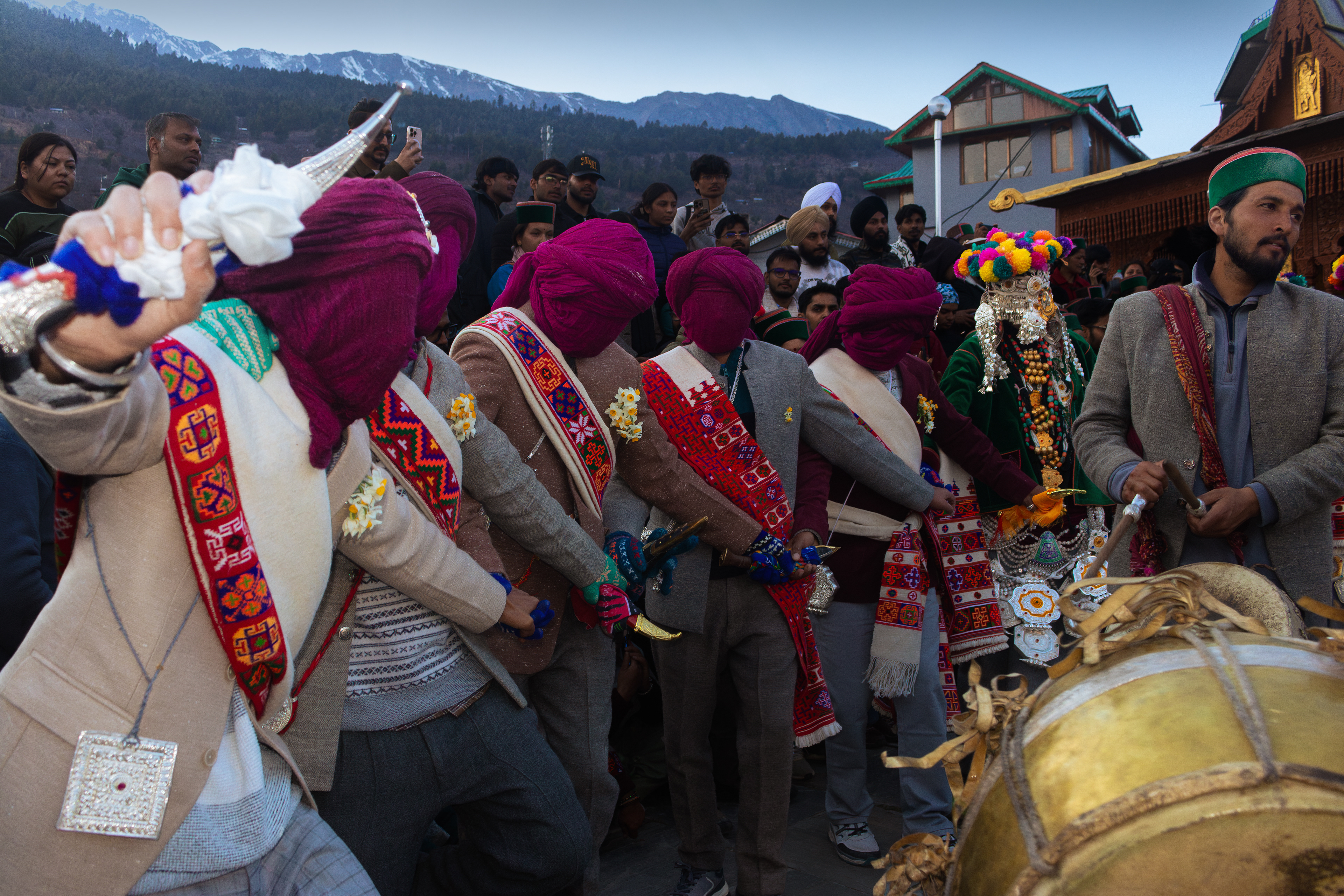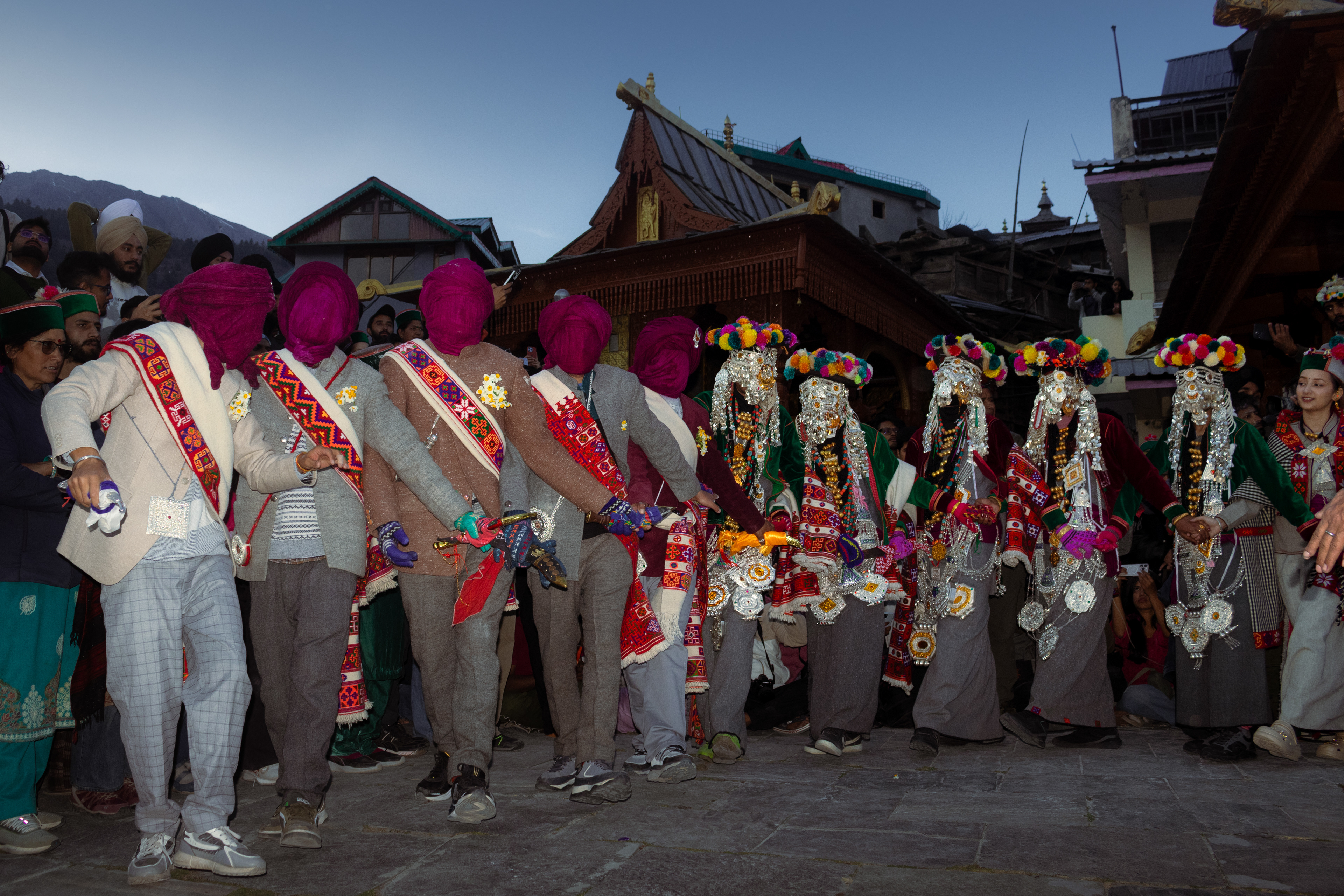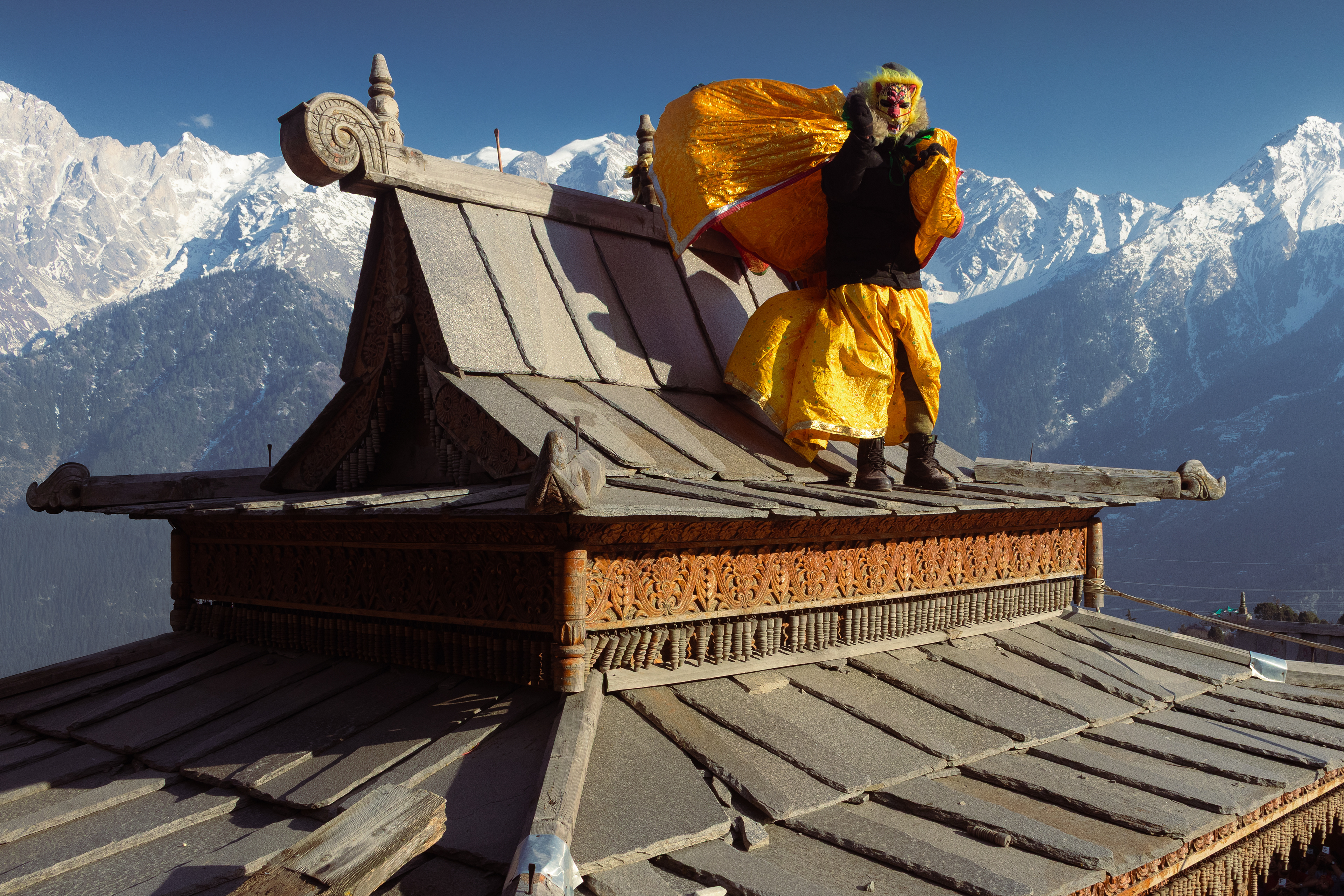
High in the Kinnaur district of Himachal Pradesh, the village of Kalpa sits at nearly three thousand metres, facing the snow peaks of the Kinner Kailash. Here, through the long winter, the people believe they are not alone. The Saunis, guardian spirits of the mountains, are said to come down from the high meadows in the cold months to watch over the village, and when spring returns, the community gathers to honour them before they climb back to the pastures. This farewell is Raulane.
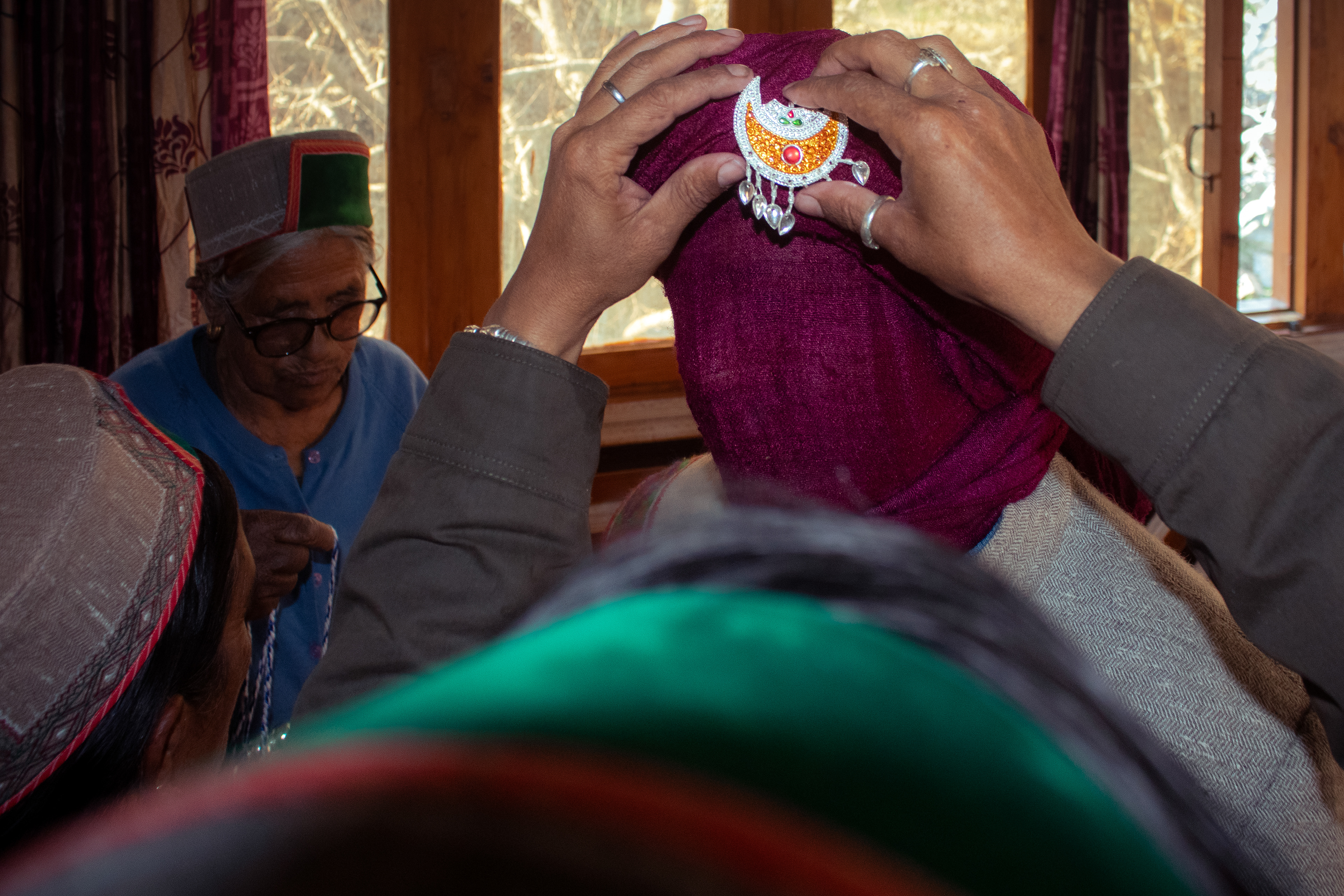
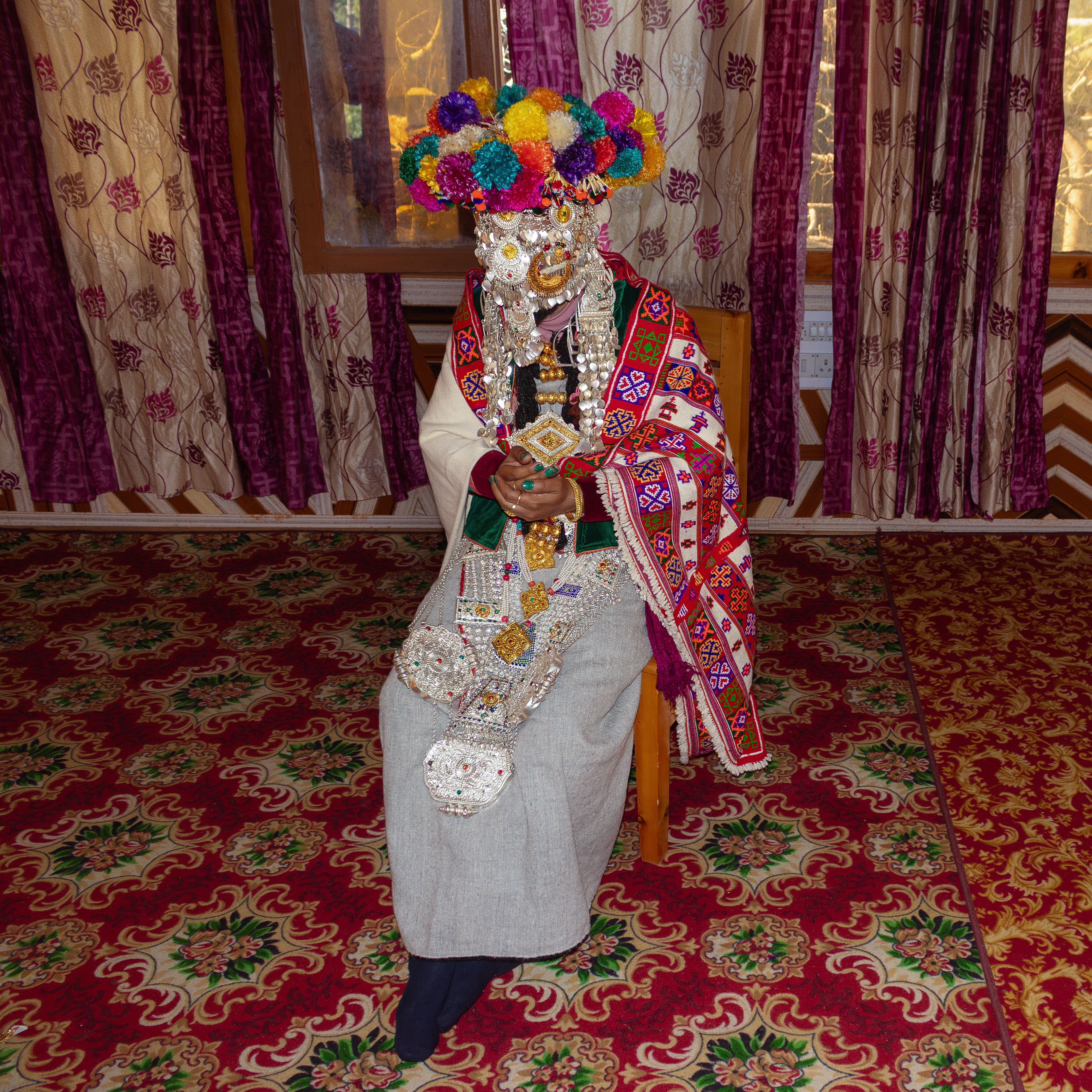
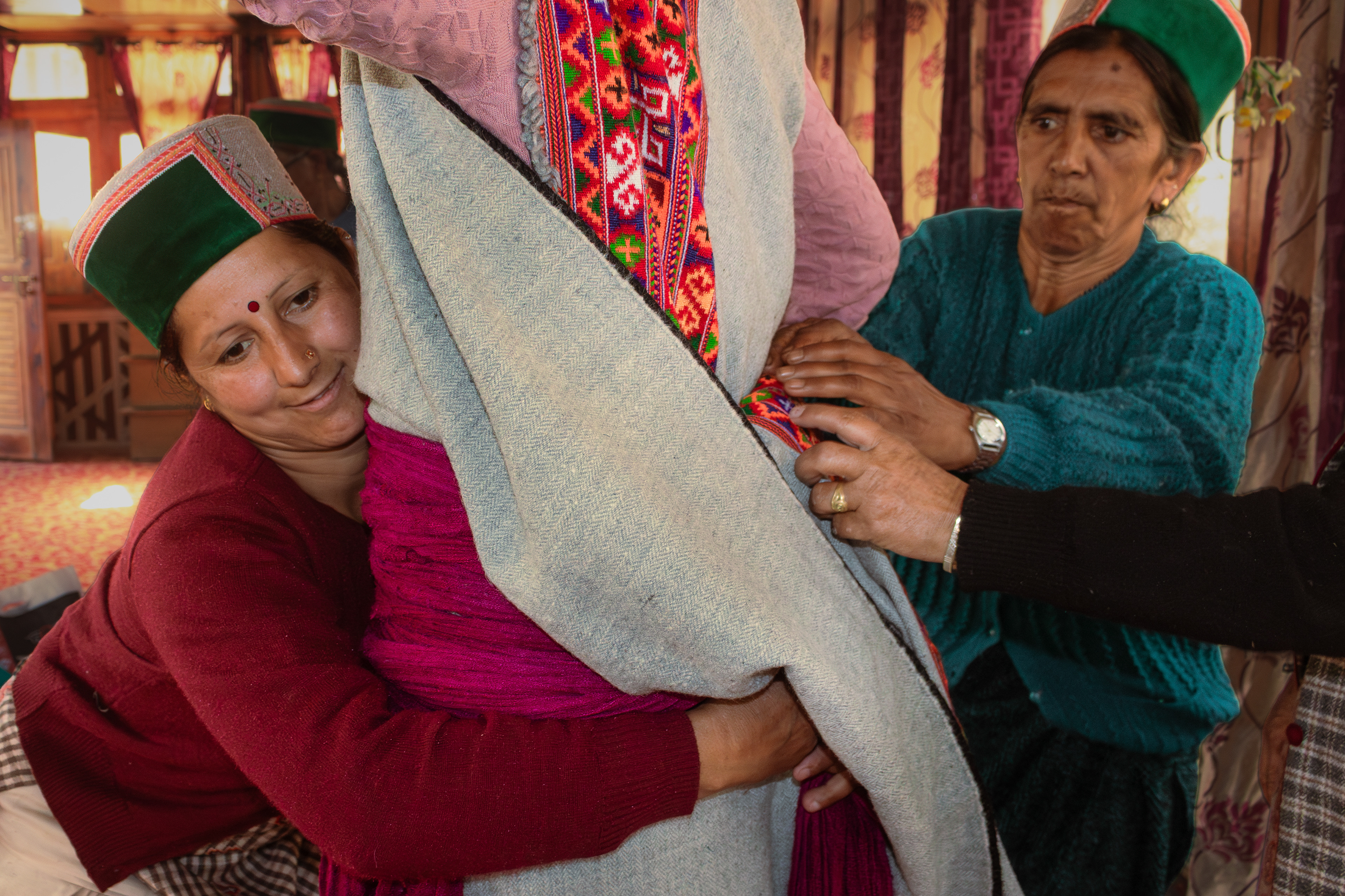
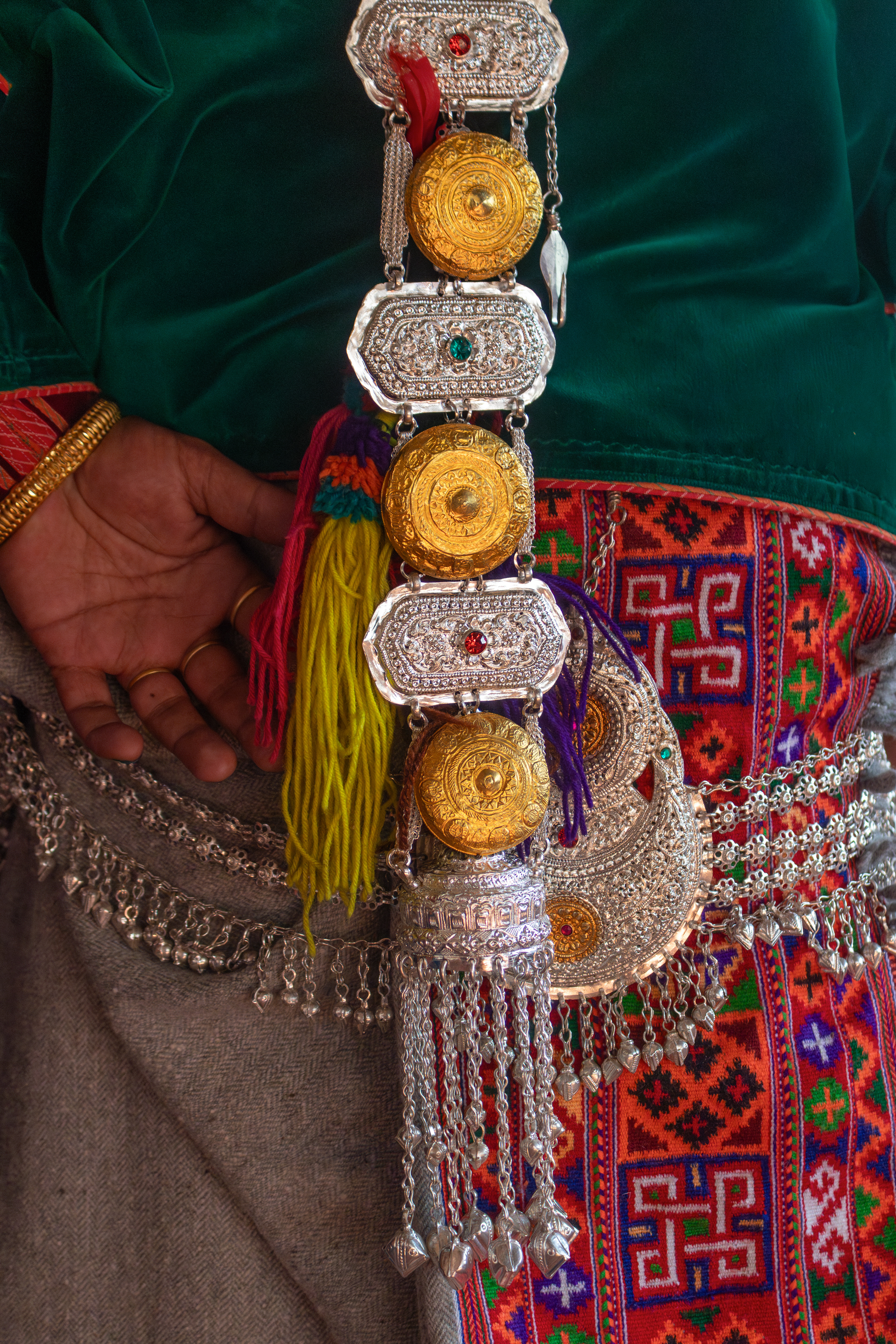
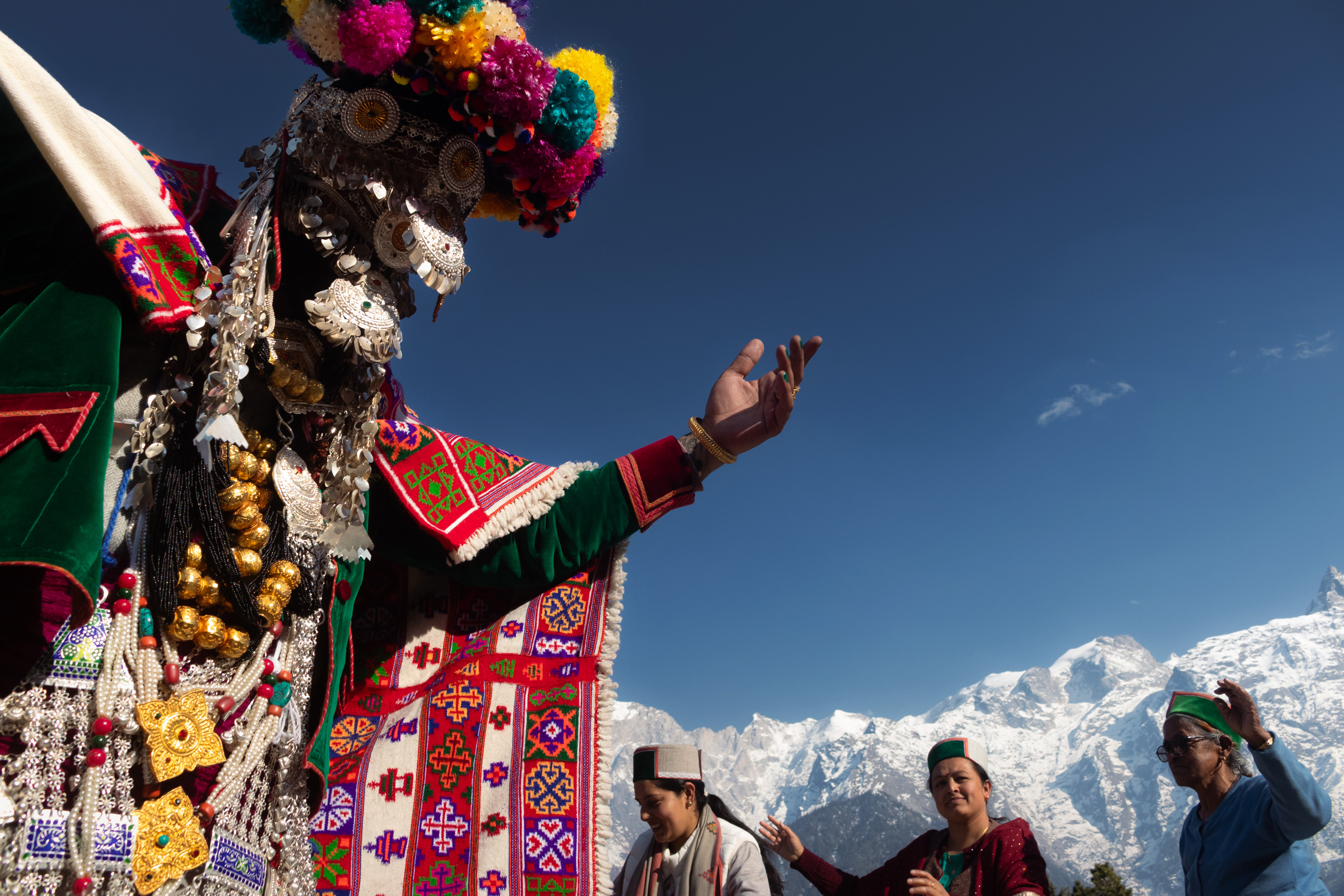
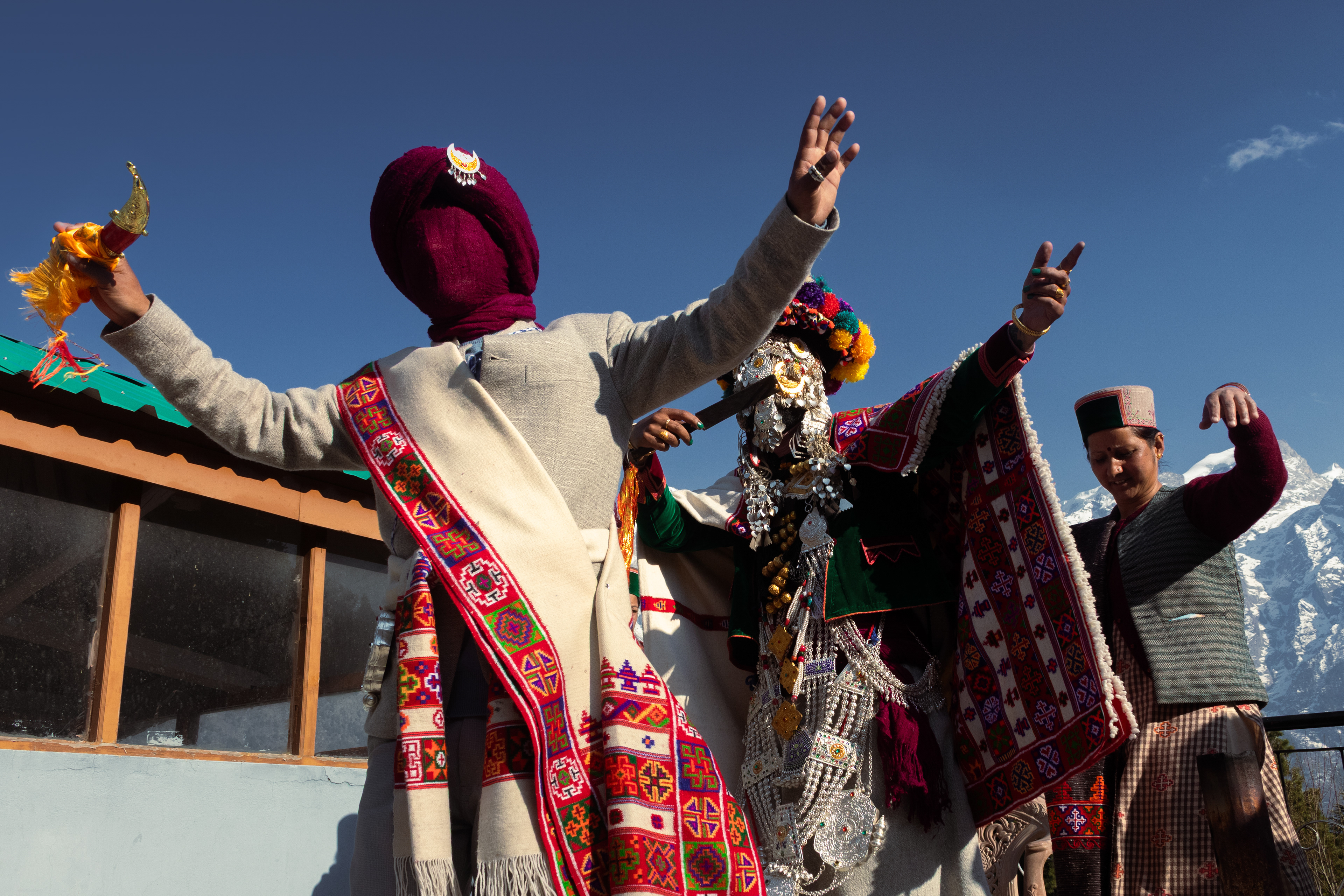
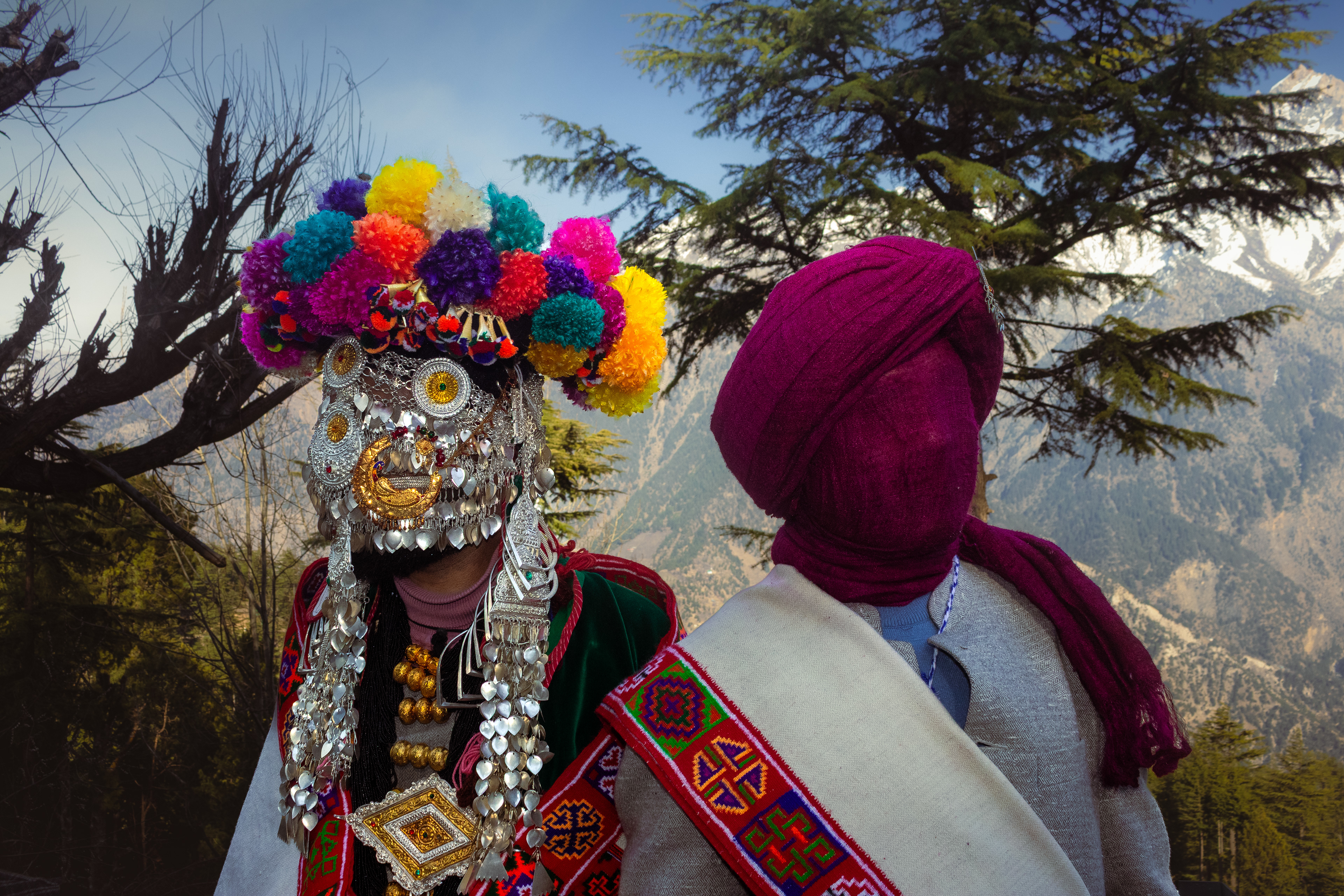
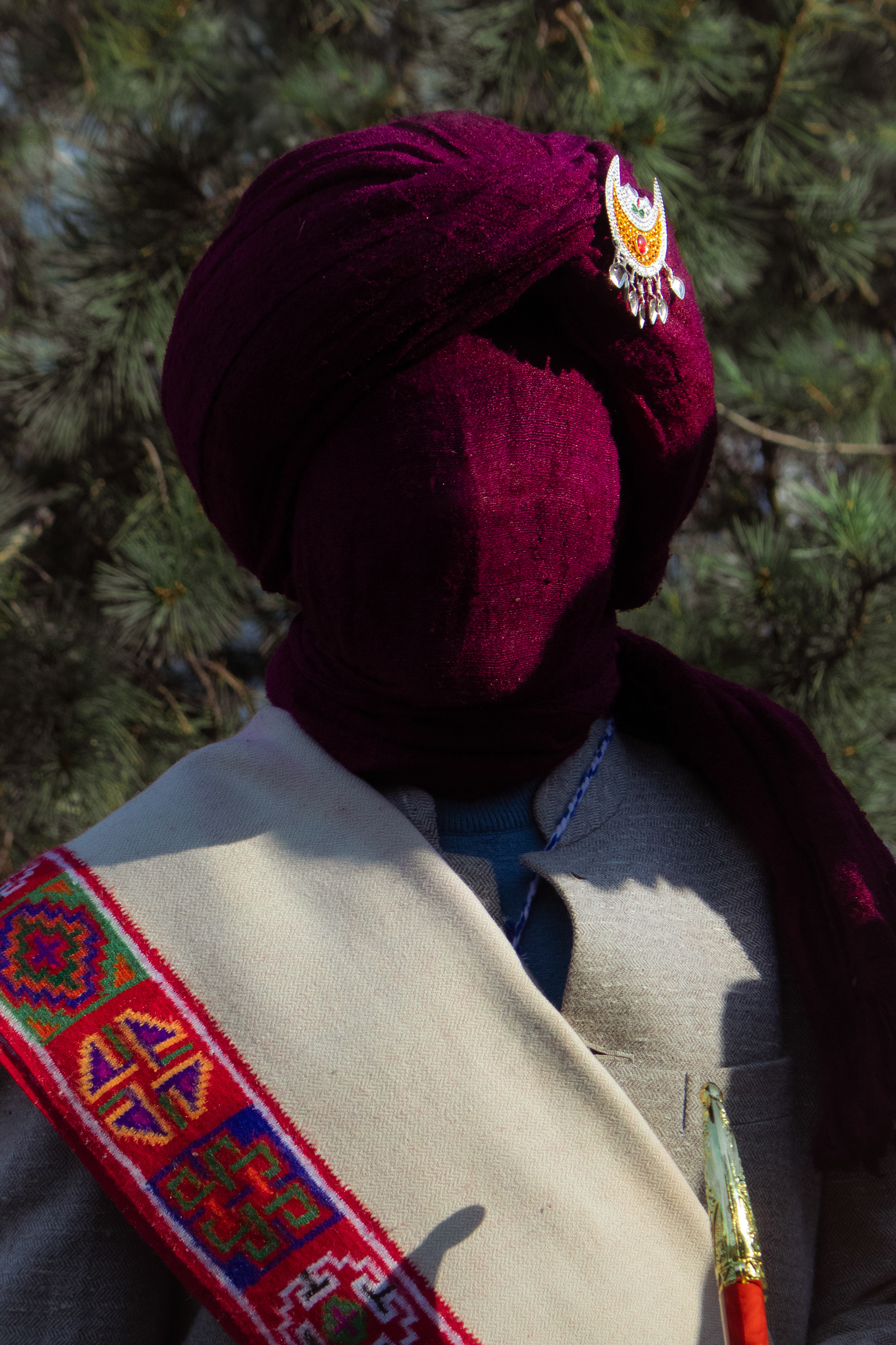
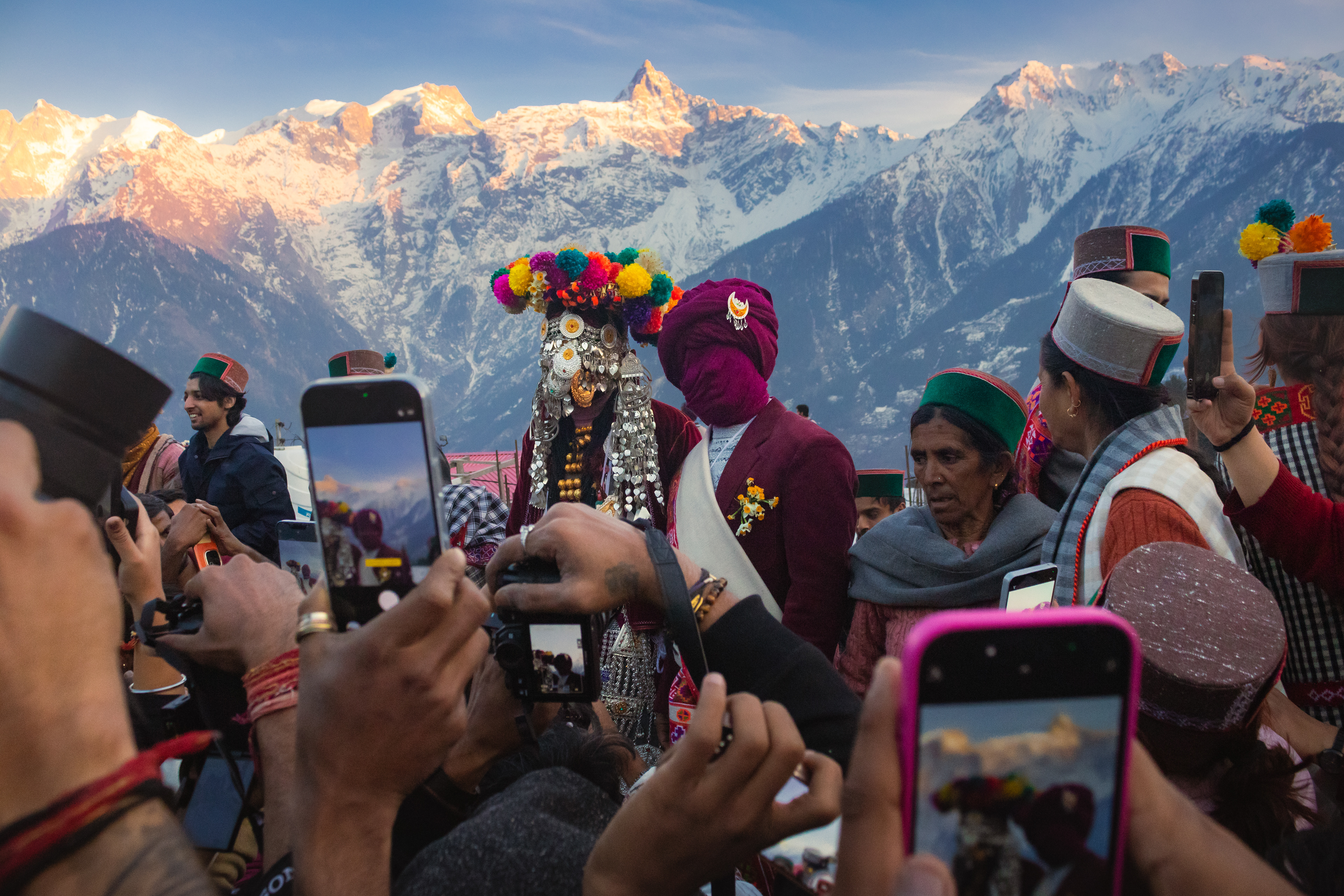
At its heart are two men. Chosen by the elders of Kalpa's Sarings, its village divisions, they take on the roles of the Raula and the Raulane, a ceremonial groom and bride. Theirs is not a wedding but a link, a way of standing between the village and the Saunis. The role moves through the community, given to different families across the years, and it begins not at the temple but at home. Behind closed doors, the family dress them with unhurried care, in heavy silver, old coins and ancestral ornaments handed down through the generations, each piece carrying its own lineage. A red veil is drawn across the Raula's face. The villagers offer two reasons for it: so that the spirits will not recognise the humans and carry them away, and so that a person may stand before the Saunis in humility. Hands that have done this before steady the weight of it all.
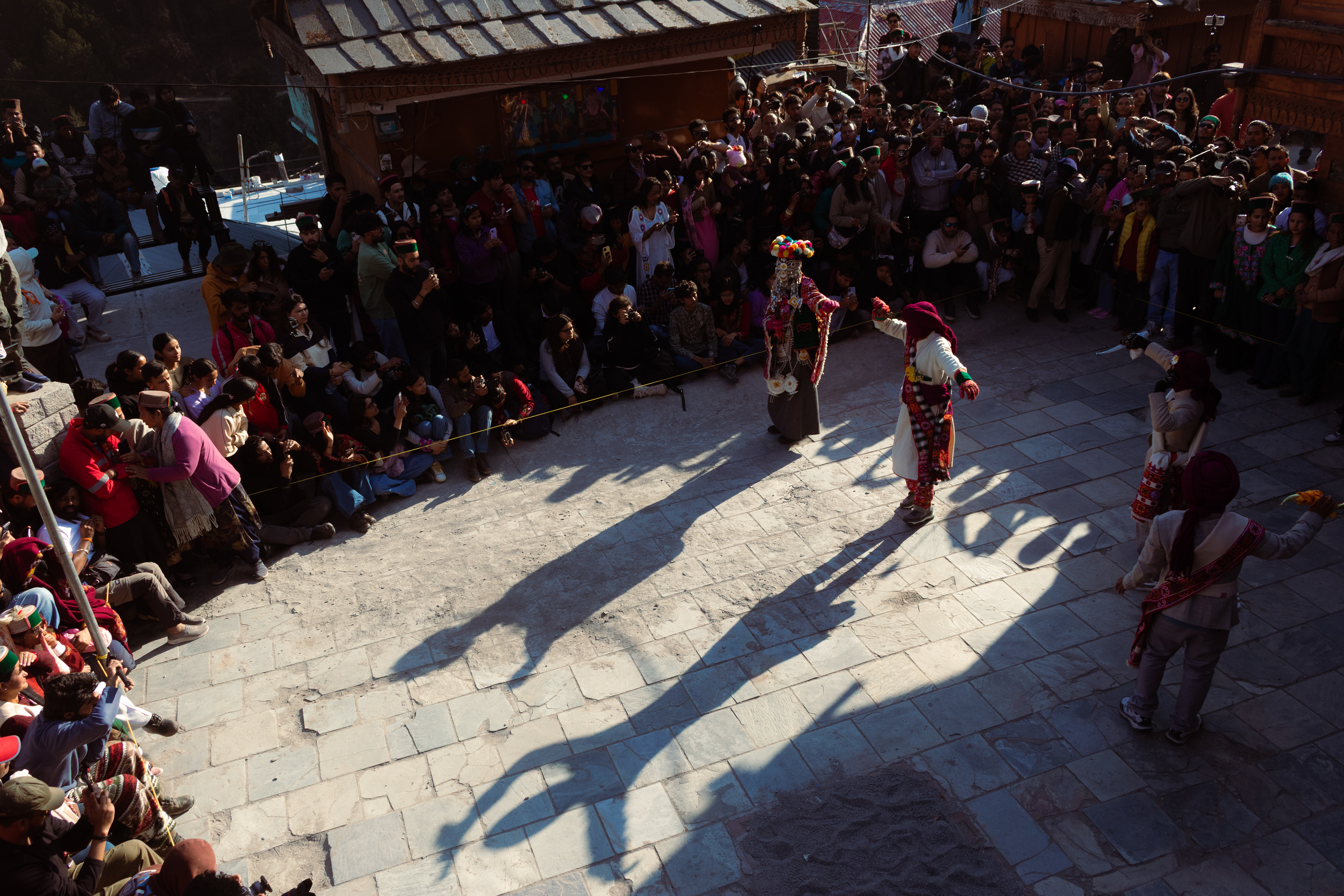
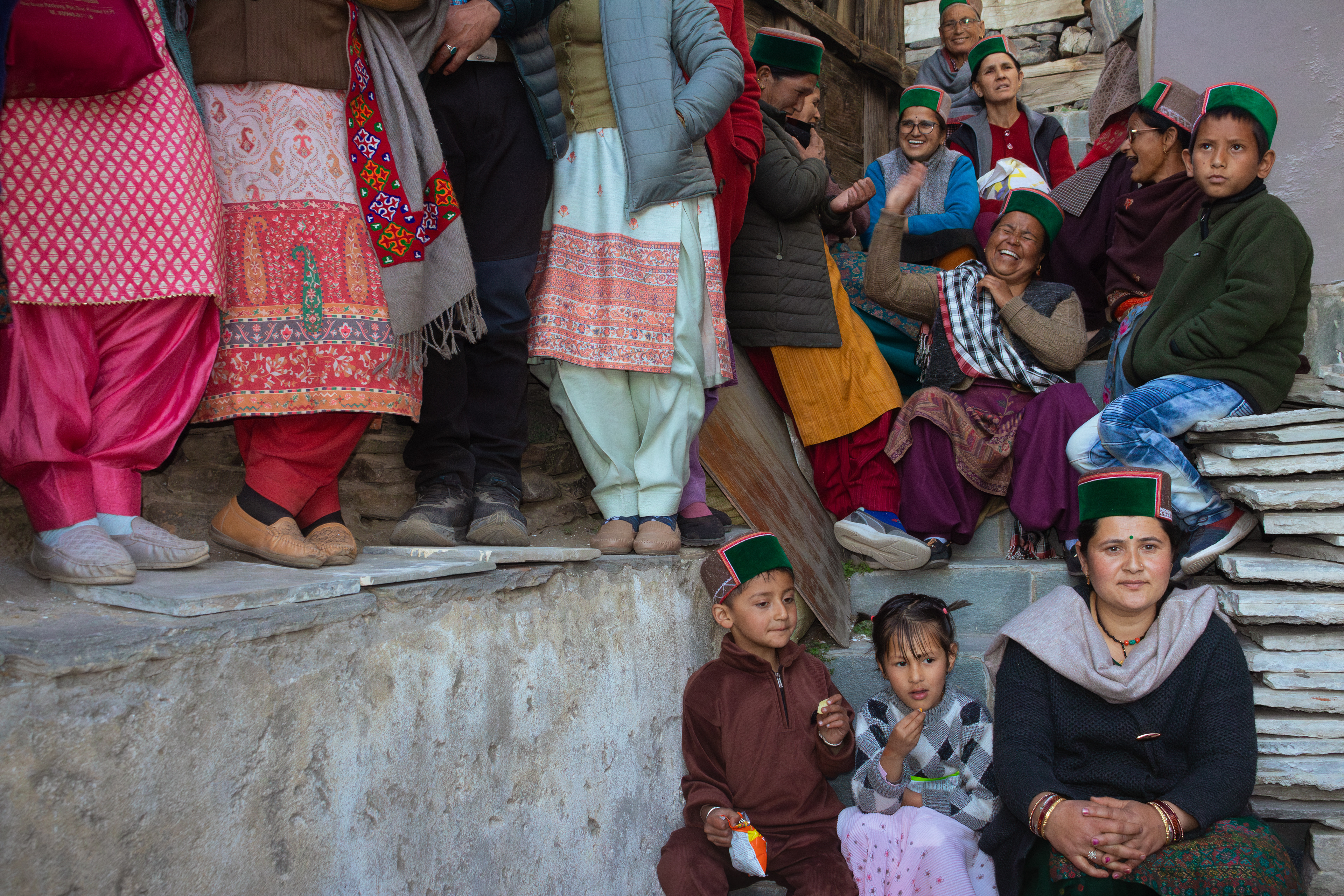
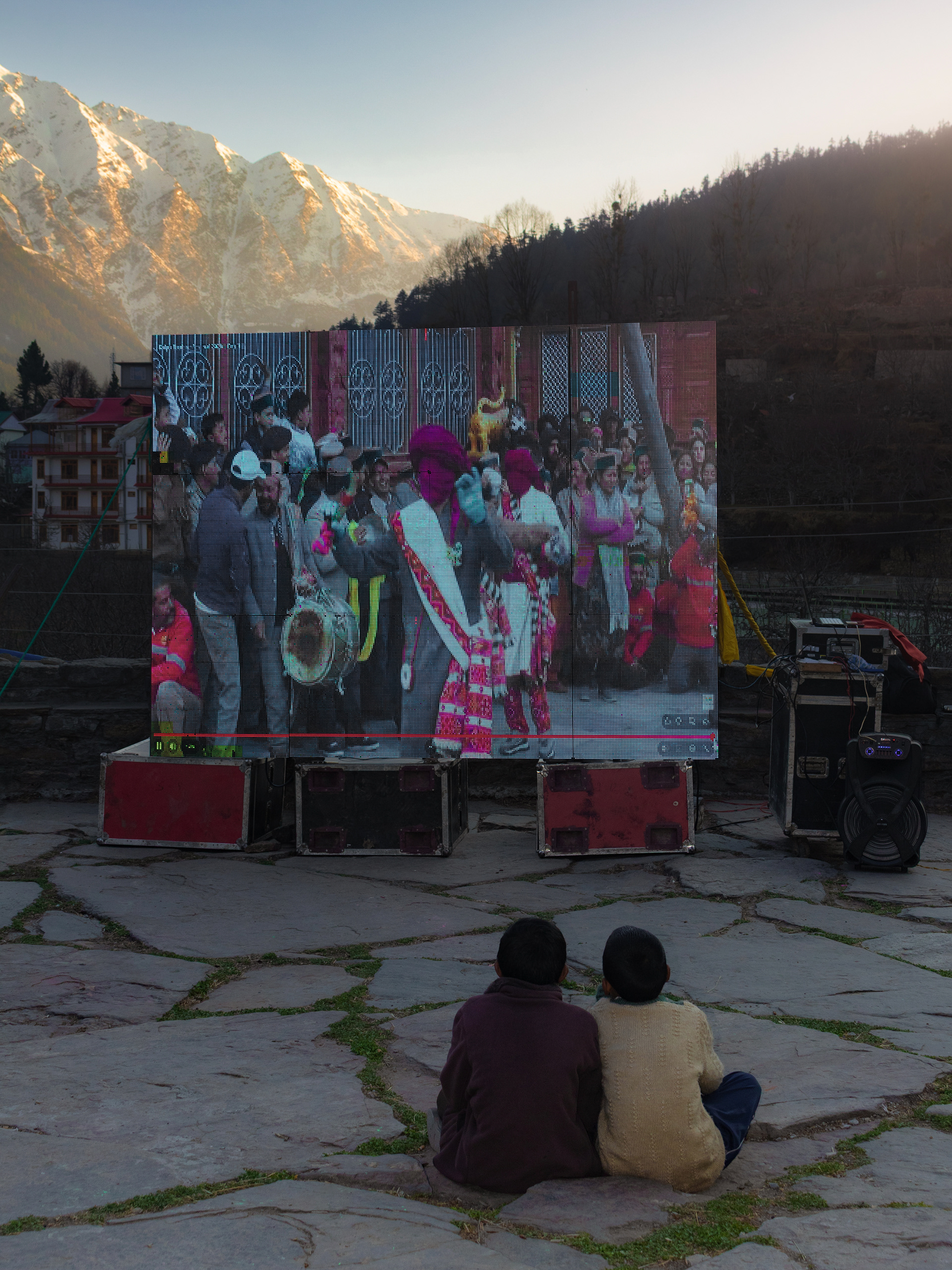
Then they step out. The pair meet at the Nag Narayan temple and move through the village in procession, drums behind them, and before the watching community they perform a slow, deliberate dance beneath the mountains. For a few days each spring, in ornament and ritual and reunion, a small Himalayan community renews something old, and sees itself whole.